
Imagine a world where getting lost is a relic of the past.
Where unknown paths do not generate anxiety, but curiosity about the unexplored.
This is the present forged by geolocation applications: tools that transcended their function as digital guides to become accomplices of adventures, everyday allies and architects of contemporary human exploration.
We analyze how Google Maps, Waze and HERE WeGo they turned smartphones into compasses of the 21st century, redefining our relationship with space, time and uncertainty.
See also
- Liberated Melodies The Offline Streaming Revolution
- Digital Alchemy: How Photos + Music = Eternal Emotion
- Cinematographic Universe in your Pocket
- The Submerged Secret
- Who Spies on Your Profile on Social Networks
Evolution: From the Sheet of Paper to the Universe on La Palma
Before apps, browsing required worn-out physical maps, topographical intuition, and epic doses of patience. The revolution began in the 70s with military satellites, but was only democratized in 2000 when the US released the civilian GPS signal. Key milestones include:
- 2005 : Google Maps introduces satellite images of streets, blurring boundaries between the physical and the digital.
- 2009 : O Waze was born as a social network in Rodoviária, where users report traffic in real time, creating a collective nervous system.
- 2014 : Here Wego (da Nokia) revolutionizes with complete offline maps, taking navigation for certain digits.
Leaf, os ** 76% two drivers globais 76% of global drivers they use GPS apps daily (Statista). But their true magic lies in how they reconfigured our psyche: we no longer fear the unknown, we invite it.
The Three Pillars of the New Cartography
1. Google Maps: o cérebro planetário
Operation : Combines artificial intelligence, satellite images updated every millisecond, live traffic flows and millions of reviews. Its algorithm learns from every route taken on the planet.
Expanded superpowers:
- Ar lenses : Project arrows onto streets using the camera, like a digital sixth sense.
- Eco-guide : select broken ones that reduce CO2 emissions based on no real vehicle consumption.
- Urban Memory: Reconstruct missing historical places through 360° photos and testimonies.
Social impact: - Universal accessibility : sinais of ramps and broken rhodeira chains in 30 Met
- Against Forgetfulness: Preserve traditions with audio guides of local markets narrated by elders.
2. Waze: The Collective Consciousness of Asphalt
Operation: Turns every driver into a human sensor. Reports of accidents, cheap gas stations or storms feed an ecosystem of road solidarity.
Expanded superpowers:
- Guardians of the Route: Alerts of injured animals, ice on roads or demonstrations.
- Emotional Connection: Send personalized voicemails (I'll be there for the cake, grandma!).
- Social Fabric: Waze Carpool creates neighborhood communities that share trips.
Social impact: - Saving Lives: In Brazil, alerts for dangerous curves reduced accidents by 22% on mountain roads.
- Resilience: In natural disasters, users mark evacuation routes and help centers.
3. HERE WeGo: The Boundless Explorer
Operation: Works in areas without coverage using downloadable maps that weigh less than a selfie.
Expanded superpowers:
- Total Mobility: Compare 12 means of transportation, from Venetian gondolas to Thai tuk-tuks.
- AR for Pedestrians: Floating arrows guide you in labyrinthine historic centers such as Fez or Prague.
- Smart Cities: Predict free parking spaces using urban sensors.
Social impact: - Global Equalizer: Works in 200 countries, including rural areas of Africa with poor internet.
- Green Footprint: Show how many trees you save when choosing bike routes.
12 Benefits that Redraw Our Existence
- Time Reconquered: Dynamic routes save up to 18 days a year in traffic (MIT).
- Invisible Shields: Alerts from mobile radars or flooded roads prevent tragedies.
- Programmed Serendipity: Suggest hidden bookstores or secret viewpoints on your daily route.
- Generational Inclusion: Grandparents regain autonomy; Migrants navigate new cities without language barriers.
- Automobile Peace: Goodbye to marital arguments over wrong addresses.
- Savings Bag: Calculate exact costs of tolls, gasoline and subway fares.
- Affective Archaeology: Save coordinates of your first kiss or where you scattered ashes of a loved one.
- Oxygen for Small Businesses: Neighborhood stores appear with exclusive photos and promotions.
- Ethical Tourism: Divert routes away from ecological sanctuaries or indigenous communities.
- Human Threads: Find friends at massive festivals or share real-time location during emergencies.
- Space Education: Generate personalized maps for children learning geography.
- Self-knowledge: Monthly statistics reveal patterns (eg Why do you always avoid your childhood park? ar).
Challenges: When Technology Hesitates (and Solutions)
⚠₡ Critical Points:
- Signal Deserts: Tunnels or mountains interrupt connections.
Innovative solution: HERE WeGo uses gyroscopes and accelerometers to navigate like a submarine in the dark. - Dangerous Shortcuts: Algorithms may suggest dark alleys.
Human solution: Waze allows you to mark prohibited areas at night, creating secure digital fences. - Cartographic Amnesia: 32% of those under 25 years of age cannot read maps on paper (NatGeo).
Pedagogical solution: Apps like Apple Maps they include urethro fru modes with analog compasses for practice. - Options overload: Too many routes generate decisional paralysis.
Zen solution: Google Maps tests a ÚRuta Serendipia mode in which it chooses paths for scenic beauty.
Or future: beyond the horizon
Next front he unravels:
- Symbiotic autonomy : Volvo cars that we negotiate broken ideas using or Waze Cloud.
- Ceus connected : Drones from Amazon with delivery to Rio Favelas.
- Gêmeos digitais : virtuous replicas of cities here to simulate epidemics or migratory flows.
- Emotional GPS : do not develop EU, avoid places associated with trauma using vestive dice.
- Living cartography : maps that sofrem sofrimento em tempo real com events de rua (for example, a graphite that changes or meaning of a rua).
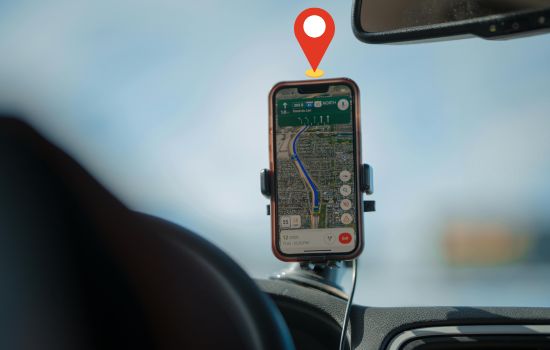
Conclusion: The path as a mirror of the soul
Google Maps, Waze and HERE WeGo are technological mirrors of our ancient desire to explore. They correct mistakes but celebrate the detours where memorable stories are born.
They have turned the smartphone into a talisman of freedom: for the refugee who crosses borders, the delivery man who avoids floods, or the child who pedals towards his first day of school.
Its revolution is not in satellites or algorithms, but in how eles forward or ato to browse .
Waze makes us complicit in a mobile tribe; Google Maps whispers urban secrets like an old local; HERE WeGo proves that even without a signal, we are never truly lost.
In an uncertain world, carrying a GPS in your bag is carrying the promise that no road is impassable.
And that every destination, no matter how remote it may seem, is one ÎHe has reached his destination away. The last curve always holds a surprise: perhaps the journey was not towards a place, but towards a bolder version of ourselves.
Download links
From Browser to Companion