History and origin of the rivalry
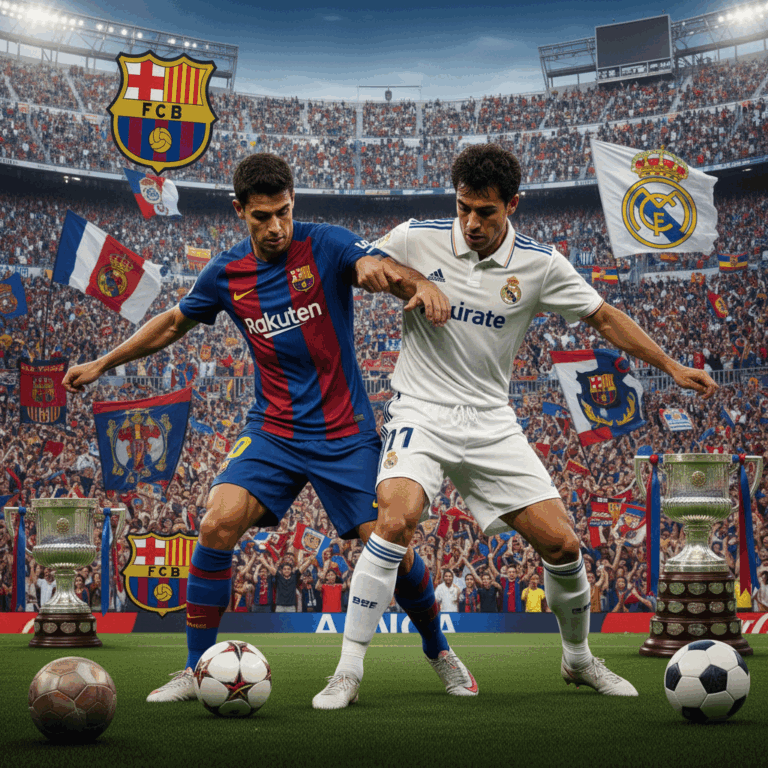
The rivalry between FC Barcelona and Real Madrid, known as The classic, is an emblematic confrontation in world football. Its origins go beyond sport, reflecting historical and social differences between regions of Spain.
Since their first official confrontation in 1902, the competitiveness between both clubs has grown considerably. But it was during the semifinals of the Copa del Rey in 1916 when the most intense tensions arose and the rivalry began to take a deeper turn.
The first matches showed not only the sporting rivalry, but also the passion and resentment that the fans developed, marking the beginning of a historic enmity between both teams.
First confrontations and initial tensions
The first official match between Barcelona and Real Madrid took place in 1902, establishing the foundations for what would be a great rivalry. Years later, in 1916, the controversial refereeing decision in the Copa del Rey intensified the conflict.
This decision favored Real Madrid, which provoked Barcelona's protest and sowed resentment that spread beyond the field. The confrontations began to have an emotional and symbolic charge that would persist in the following decades.
These initial episodes were crucial to strengthen an enmity that would transcend sport, creating the essence of the Classic, a confrontation with historical and cultural implications.
Political and social context during the 20th century
During the 20th century, the rivalry was reinforced by the political and social context. Franco's dictatorship placed Real Madrid as a symbol of central power, while Barcelona represented the Catalan resistance and its regional identity.
This political use exacerbated differences and gave extra-football meaning to the Clásico. The match stopped being just a sporting event and became a scene of cultural and social confrontation.
Thus, both clubs assumed symbolic roles that reflected the existing tensions in Spain, making each party a manifestation of deep-rooted historical and political conflicts.
Political and social meaning of the Classic
The Clásico transcends sport to become a symbol of political and social tensions between Catalonia and Spain. The two clubs represent very different identities and values.
This rivalry reflects conflicts of power, identity and culture that have intensified over time, consolidating the confrontation as an event of great emotional and political charge.
Each match is a microcosm of the historical relations between the regions, a clash that goes beyond the ball, where symbols and collective memories are played.
Symbolism of FC Barcelona and Real Madrid
FC Barcelona is perceived as the representation of Catalan identity, culture and resistance against the Spanish centralism that Real Madrid symbolizes.
For many, Barça is not just a football club, but a banner that defends language, traditions and autonomy against Madrid and state hegemony.
For its part, Real Madrid has historically been linked to central Andalusian political power, capturing a status as a national institution and symbol of Spanish unity.
Influence of Franco's dictatorship on the rivalry
During the Franco dictatorship, Real Madrid enjoyed privileges that reinforced its image as a regime team, while Barcelona became a refuge of opposition and Catalan pride.
The political and cultural repression towards Catalonia enhanced regional identity through Barça, transforming the parties into political as well as sporting venues.
This dynamic made the rivalry acquire a much deeper dimension, being an indirect manifestation of the fight for freedom and cultural recognition.
Regional identity and Catalan resistance
FC Barcelona represents the voice of Catalonia in the face of Spanish centralism, expressing through football the fight for identity, culture and regional rights.
Fans see the club as more than a team; It is a symbol of resistance that channels the feeling of belonging and Catalan political demands.
Interesting fact about the Catalan resistance
Throughout history, the Catalan language was banned in official settings during the dictatorship, but Barça kept the culture alive through hymns and chants in Catalan at their matches.
Sporty appearance and legendary figures
The Clásico is not only a clash of identities, but also an intense sporting battle. Throughout history, FC Barcelona and Real Madrid have competed for numerous titles that fuel the rivalry.
This confrontation has marked the golden age of Spanish football, with memorable matches that have defined league championships, national and international cups. Each match is a sign of quality and passion.
The rivalry has driven both teams to pursue excellence, investing in signings of great players and creating shows that capture global attention.
Sports fights and disputed titles
The Barça-Madrid confrontation is synonymous with high competition, with more than a century of duels for national and international supremacy. Both clubs dominate the title tables in Spain.
Numerous leagues, Copa del Rey and the Champions League have been played, turning each Classic into a decisive moment to define champions and records.
This constant struggle represents the effort to maintain sporting hegemony and achieve the greatest glory in world football, consolidating both as giants of sport.
Historical and modern stars of the Classic
The Clásico has been the setting for legends such as Alfredo Di Stéfano, who revolutionized the game in the 1950s, and Ladislao Kubala, a Barcelona icon with unique abilities.
In recent times, Cristiano Ronaldo and Lionel Messi have dominated the rivalry, taking the show to levels never seen before with their goals, assists and leadership.
These figures not only shone on the field, but also symbolized the greatness and fierce competition that characterizes this historic confrontation.
Cultural and global impact
The Clásico between FC Barcelona and Real Madrid transcends football to become a cultural phenomenon with global reach. Millions of fans follow each confrontation with great interest.
This match not only shows sporting rivalry, but also reflects historical and social tensions that impact various areas, from politics to regional and national identity.
The impact of El Clásico has turned the event into an expected moment on the world sports calendar, capable of generating debates and mobilizing followers around the planet.
Global impact of the confrontation
The Classic is one of the most watched sporting events in the world, broadcast in more than 150 countries and followed by hundreds of millions of viewers each season.
The significance of the match goes beyond sport; Many international media highlight the rivalry not only for the players, but for the historical and social burden it represents.
This global impact has helped position Spanish football as a world reference and has taken sporting rivalries with a unique background to their maximum expression.
The Classic as a symbol of identity and social confrontation
More than a party, El Clásico represents a clash of opposing identities and values: Catalan autonomy and culture against Spanish centralism, expressed in its fans and symbols.
This confrontation becomes a social manifestation where political and cultural aspects are projected in the sporting framework, evidencing present historical tensions.
For many, the Clásico is an opportunity to reaffirm their sense of belonging and vindicate their beliefs, turning football into a vehicle for social and political expression.