Types of injuries common in football
In football, injuries are very common due to the high physical demand and the diversity of explosive movements performed in each match or training session.
Knowing the most common types of injuries helps you understand how to prevent them and treat them appropriately to maintain a healthy and long-lasting sports career.
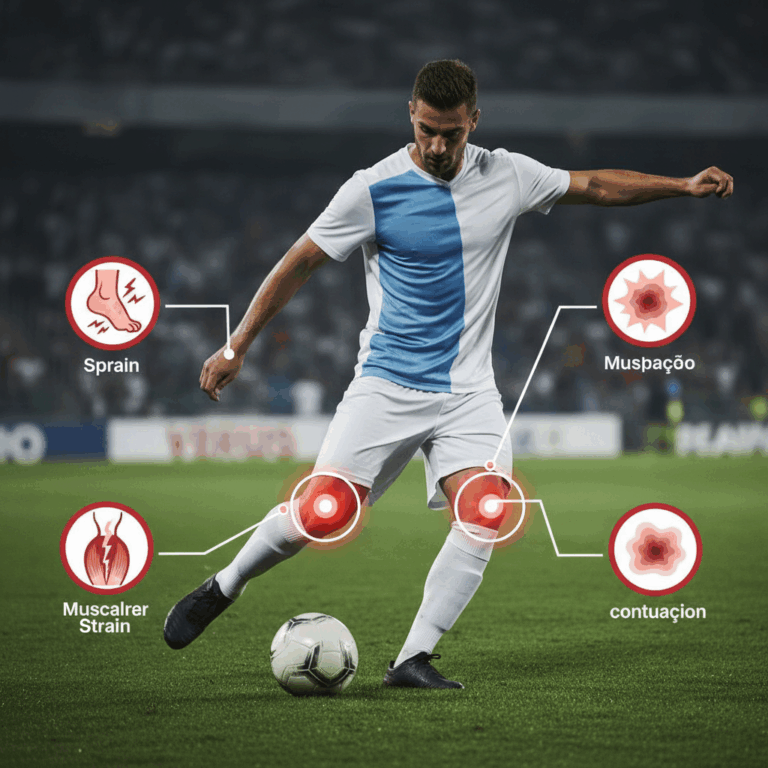
Ligament sprains
Ligament sprains are common injuries in soccer that mainly affect the knee and ankle, very vulnerable joints during intense play.
These injuries occur from sudden movements, inappropriate falls or crashes, and can range from a slight stretch to a complete tear of the ligament.
Recovery time depends on severity, and adequate treatment is essential to avoid sequelae and new injuries.
Muscle injuries
Muscle injuries include tears, contractures, and strains, often in muscles such as the hamstrings, quadriceps, and calves.
They are caused by explosive efforts, lack of prior warm-up, fatigue or overtraining, common conditions in soccer practice.
Prevention and correct management of these injuries are key to maintaining performance and avoiding future complications.
Joint injuries, tendinopathies and trauma
In football, joint injuries, tendinopathies and trauma are common due to the intensity of the sport and rapid, repetitive movements.
These injuries can affect functionality and continuity in sports practice, so their recognition and proper management are essential.
Understanding the types and causes allows you to implement effective prevention and treatment strategies to reduce the risk of complications.
Joint and meniscus injuries
Joint injuries, such as torn anterior cruciate ligament (ACL), are common in soccer and affect knee stability.
Meniscus injuries often occur from twisting or impacts, and can cause pain, inflammation, and limitations in movement.
These injuries may require everything from conservative treatment to surgery, depending on the severity and functional commitment of the player.
Tendinopathies and overloads
Tendinopathies, mainly patellar tendonitis, are tendon inflammations caused by repetitive movements and constant overload.
Lack of adequate rest and overtraining increase the risk of developing these injuries, which present with progressive pain and decreased performance.
Early management with rest, physiotherapy and load control is vital to avoid chronicity and relapses.
Trauma and fractures
Trauma in soccer includes direct blows, bruises, dislocations and fractures, with fractures in the tibia and fibula being common.
These injuries often occur from intense physical contact and may require urgent medical attention and a prolonged rehabilitation process.
The use of appropriate protective equipment is crucial to minimize the risk of fractures and other traumatic injuries.
Mechanisms and causes of injuries
Injuries in soccer usually originate from factors that affect the physical integrity of the player during the intense and dynamic practice of the sport.
Identifying these mechanisms is essential to design strategies that reduce the incidence and severity of injuries.
Among the main causes are sudden movements, fatigue and lack of adequate preparation.
Sudden movements and crashes
Rapid, unexpected movements, such as changes in direction and sprints, subject joints and muscles to intense stresses that can cause injury.
Collisions with other players also generate strong impacts that can cause bruises, sprains and fractures.
These factors require correct technique and physical preparation to minimize the risk of damage.
In addition, good physical condition helps to better absorb loads and protect body structures.
Fatigue and overtraining
Muscle fatigue decreases responsiveness and increases vulnerability to injury, being common in prolonged training and matches.
Overtraining, without the necessary breaks, causes cumulative wear and tear that affects tendons and muscles.
It is essential to respect recovery times so that the body recovers its condition and responds effectively to stimuli.
Bad technique and lack of warm-up
Incorrect technique in executing movements increases joint and muscle wear, promoting the appearance of injuries.
The absence of adequate warming reduces muscle elasticity and joint mobility, increasing the possibility of damage.
Performing specific activation and stretching exercises prior to the game prepares the body for physical demands.
Prevention of injuries in football
Injury prevention in football is essential to ensure the optimal health and performance of players. A comprehensive approach reduces significant risks.
Adopting appropriate habits and performing specific exercises helps minimize the incidence and severity of common injuries in this demanding sport.
Warming up and strengthening muscles
Prewarming up is key to preparing muscles and joints, increasing body temperature and improving joint mobility.
Performing muscle activation exercises, dynamic stretching and specific mobility reduces the chances of contractures and sprains.
Strengthening muscles and joint stabilizers, especially in the ankles, knees and hips, through adapted routines, improves control and balance.
In addition, proprioception helps prevent falls by improving body perception and reaction to unexpected movements.
Rest, equipment and healthy habits
Respecting rest times prevents fatigue and overtraining, factors that favor the appearance of injuries due to overload and muscle deterioration.
Wearing appropriate equipment, such as boots with good grip and shin guards, protects from impacts and reduces the risk of trauma during play.
Maintaining a balanced diet and proper hydration is essential to optimize player recovery and performance.
Finally, carrying out periodic medical and physiotherapy checks makes it possible to detect discomfort in time and prevent future complications.