Benefits of VAR in football
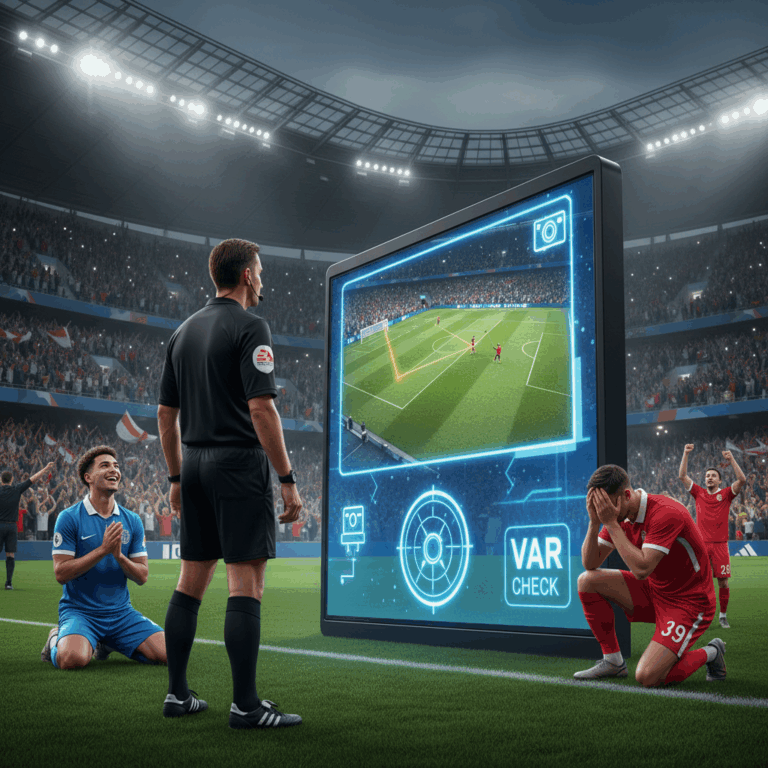
The implementation of the VAR it has transformed refereeing in football, providing greater justice and precision in crucial decisions. Through technology, human errors are minimized in complex plays.
This advance has generated a notable reduction in injustices, benefiting players, teams and fans. In addition, it strengthens transparency and trust in referee decisions.
Improvement of justice and reduction of arbitration errors
The VAR allows you to review offside goals, doubtful penalties and controversial red cards from various angles, reducing the margin of error. This represents a qualitative leap in the fairness of the game.
The possibility of correcting errors prevents incorrect final decisions that could affect the result of the match, achieving fairer and more competitive football for everyone involved.
It also helps detect unsportsmanlike behavior and simulations, promoting discipline among players by increasing the effectiveness of sanctions.
Technological support and reduction of protests
With VAR, referees have technological support that reduces pressure on key decisions by offering clear and verifiable evidence of plays.
This has generated a decrease in protests from players and coaches, as transparent reviews reduce suspicion of unfair arbitration and improve acceptance of decisions.
In addition, it has almost completely eliminated identity errors, in which the wrong player was previously sanctioned, raising the precision and legitimacy of refereeing.
Challenges and criticisms of the use of VAR
Although VAR has improved fairness in football, it also faces significant criticism that affects the essence of the game. These concerns revolve around how it influences the pace and excitement of the match.
Prolonged interruptions to review plays generate frustration in players and fans. Furthermore, subjectivity persists in certain decisions, which maintains the debate about the total effectiveness of the system.
Another delicate aspect is arbitrary liability, since the VAR does not exempt the main arbitrator and can cause controversy over who takes the final say in conflict situations.
Interruptions and loss of pace of the game
Pauses to review plays using VAR are often long and unpredictable, breaking the natural fluidity of the match and affecting both players and spectators.
This interruption reduces spontaneity and emotion, even when celebrating goals, since the uncertainty of a possible technological check attenuates immediate enjoyment.
As a result, some believe that VAR can alter the traditional dynamics of football and diminish its emotional appeal at key moments in the game.
Persistence of controversies and subjectivity
Although the VAR reviews important decisions, it does not eliminate the subjective component of refereeing, as some plays depend on the interpretation of the main referee.
This factor maintains debates and controversies even after the use of technology, since human judgment remains fundamental in final determinations.
The presence of VAR does not make decisions absolute, and can sometimes generate new controversies about reviews and their results.
Responsibility and debates on arbitration decisions
VAR introduces a new level of analysis, but the ultimate responsibility remains with the referee, who can transfer pressure without removing it completely.
This aspect generates discussions about the authority and role of referees in the use of technology, and how decision-making is distributed on the field and in the control center.
VAR integration poses a dilemma about trust in technology versus human judgment, fueling constant debates in modern football.
Influence of VAR on the dynamics of the match
VAR has profoundly changed the dynamics of football, impacting both the flow of the game and the emotional experience of players and fans.
Although it provides greater justice, its use also introduces pauses that alter the spontaneity and emotion that characterize the beautiful sport.
Effects on the emotion and spontaneity of the game
The implementation of VAR generates interruptions that affect the natural rhythm of the match, reducing continuity and, in some cases, emotional intensity.
These pauses often create uncertainty, especially after a goal is celebrated, which can curb immediate joy and change the perception of the game.
Despite this, VAR allows fairer decisions, which reduces frustrations due to referee errors, generating emotion based on more equitable results.
Adaptation of football to the digital age
Football has undergone a profound transformation thanks to VAR, reflecting a key adaptation to the digital age. This technological tool seeks to balance innovation and the essence of sport.
The integration of VAR represents a challenge to maintain the sports tradition while taking advantage of technology to improve justice and refereeing accuracy without losing authenticity.
Balance between technology and sports tradition
The use of VAR forces us to find a middle point between the modernization about football and respect for its history and spontaneous character. This requires constant adjustments to your application.
Maintaining the classic excitement and rhythm of the game is essential to not sacrifice the original experience, while technology provides objectivity and transparency in referee decisions.
This balance is reflected in debates about the length of the breaks and the impact of the reviews, seeking an integration that does not interrupt or cool the passion of the party.
Impact on the viewer experience and future evolutions
The arrival of VAR has significantly changed how fans experience football, generating expectations about justice but also challenges in the continuity and fluidity of the game.
Viewers enjoy greater transparency, although they must adapt to pauses that can affect immediate emotion. The experience is enriched with new forms of analysis and data.
In the future, the technology is expected to evolve to reduce interruptions, improve communication and refine accuracy, thereby strengthening the connection between the game and its audience.