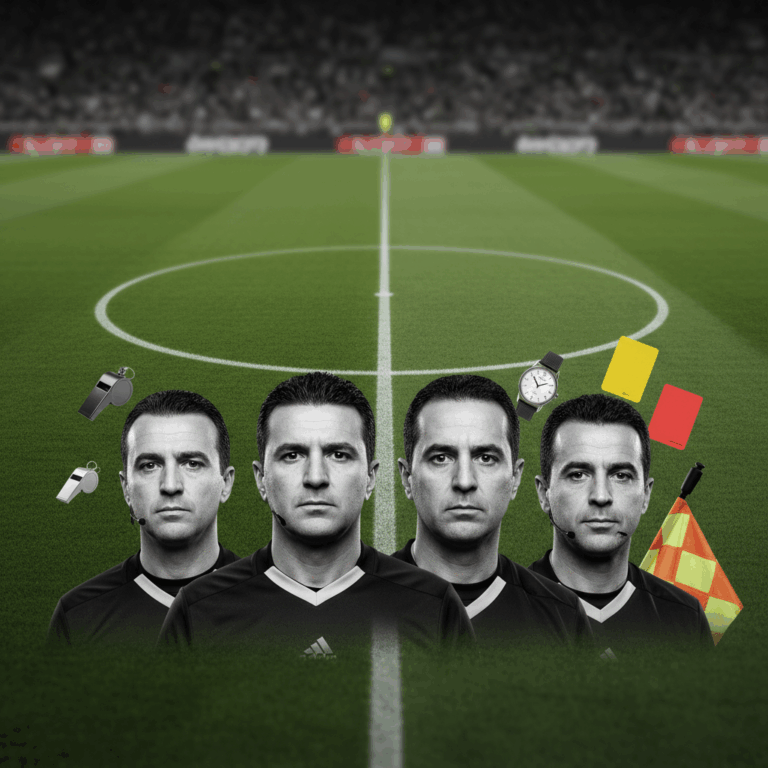
Impact and legacy of legendary referees
The legendary referees have left a lasting impact in football, setting high standards in the fair and rigorous application of the rules. His work has transformed the perception of refereeing.
Their legacy is not only reflected in historic matches but also in the influence they exert on the development of refereeing at a global level. They are symbols of integrity and precision on the field.
Thanks to them, the refereeing function has won respectability and respect, allowing a better show and confidence for both players and fans. They are emblematic figures of world football.
Influence on the development of global arbitration
The most recognized referees have contributed decisively to the evolution of refereeing, raising the rules to a higher professional and technical level. Their example has guided new practices and regulations.
Figures like Pierluigi Collina, with their control and judgment, have been pioneers in establishing behavioral models that have been replicated in all international leagues and tournaments.
Their presence in finals and key matches demonstrates the importance of referees who balance authority and justice, improving the quality and legitimacy of competitive football globally.
Importance for new generations
The legacy of these referees serves as inspiration for young referees, who see them as leaders in game management and conflict resolution under pressure.
His career and way of leading matches offer valuable lessons in integrity, discipline and professionalism, essential qualities for those who aspire to compete in the refereeing elite.
Furthermore, its fame demonstrates that refereeing can be a respected and recognized vocation, encouraging future generations to pursue excellence in this profession.
Iconic referees and their career
Iconic referees have marked different eras with their unmistakable style and globally recognized achievements. His legacy is a source of learning and admiration.
Each of them left an indelible mark in decisive matches and stood out for their ability to maintain control and justice in complex game situations.
His exemplary career has raised the esteem of refereeing and has contributed to professionalizing this function, transforming it into a pillar of modern football.
Pierluigi Collina: the most recognized referee
Pierluigi Collina is considered the most emblematic referee in the history of football. His penetrating gaze and imposing presence made him unique.
His record of six times the best referee in the world confirms his dominance and the quality of his decisions, especially in the 2002 World Cup final, where his authority was absolute.
Collina is a symbol of rigor and serenity, masterfully managing the extreme pressure involved in directing high-level parties.
Sándor Puhl and his mettle in decisive matches
Sándor Puhl stood out for his balance and mettle in important events, especially in the 1994 World Cup final, in which he exhibited great control and justice.
His sober and reliable style earned him constant recognition, making him a reference for referees seeking to remain calm in critical moments.
Puhl knew how to combine firmness with the necessary prudence to guarantee justice, earning respect from players and coaches.
Markus Merk and his dominant presence in Europe
Markus Merk was a German referee with an inflexible style and a physical presence that commanded respect in the most important European tournaments.
He directed Euro Cup finals and key Champions League matches, standing out for his ability to control high-tension matches.
His reputation as a strict but fair referee positioned him among the best of his generation in Europe.
Horacio Elizondo and his role in South American World Cups
Argentine referee Horacio Elizondo stood out in the South American World Cups, refereeing the 2006 final and fulfilling unique roles such as whistling the opening match.
His performance in that World Cup demonstrated his ability to manage matches with great pressure and continental and global relevance.
Elizondo is remembered for his natural authority and clarity in decisions, consolidating himself as a key figure in South American refereeing.
Prominent figures in the modern era
In the modern era, referees such as Howard Webb and Szymon Marciniak have stood out for their professionalism and for maintaining the high level of refereeing in international competitions.
His performances in decisive matches reflect the evolution and demands of contemporary refereeing, combining experience and adaptability to new challenges.
Howard Webb and the 2010 World Cup final
Howard Webb directed the 2010 World Cup final between Spain and the Netherlands, a high-tension match where his control was fundamental to the fluidity of the game.
His ability to handle conflict situations and controversial decisions demonstrated exceptional mastery under extreme pressure.
Webb is recognized for his calmness and ability to maintain authority, becoming a reference for modern referees.
Szymon Marciniak and contemporary arbitration
Szymon Marciniak has consolidated his career in the elite of modern refereeing, noted for his technical mastery and clarity when making decisions.
His presence in international finals underlines the confidence placed in his ability to lead complex matches with impartiality and authority.
Marciniak represents the new generation of referees who combine technology and method to optimize justice on the field.
Characteristics that defined his legend
The greatness of legendary referees is based on specific qualities that differentiate them, highlighting their management of pressure and the ability to make correct decisions at critical moments in the game.
Furthermore, his charisma and authority on the field strengthen his presence, generating respect and trust in both players and fans. These characteristics forged their legends.
His influence goes beyond technical compliance, as his character and personal style influence the perception of refereeing and set standards for future generations.
Ability to handle pressure and critical situations
Legendary referees possess exceptional ability to manage stress during tense matches, making firm and clear decisions under high pressure.
This talent is crucial in decisive events like world finals, where every mistake can have big consequences for teams and fans.
Refereeing at critical moments requires calm and experience, qualities that characters like Pierluigi Collina and Howard Webb masterfully demonstrated.
These referees also stand out for anticipating conflicts and managing discipline, guaranteeing justice without losing control of the match.
Charisma and authority in the field
A common trait of legendary referees is their charisma, which allows them to command respect and maintain authority without resorting to constant confrontation.
Their physical and communicative presence positively influences the game, helping to manage the attitudes of players and coaches during the development of the match.
This charisma also facilitates the acceptance of their decisions, even in controversial situations, consolidating their role as central figures in the football spectacle.