Historical evolution of uniforms
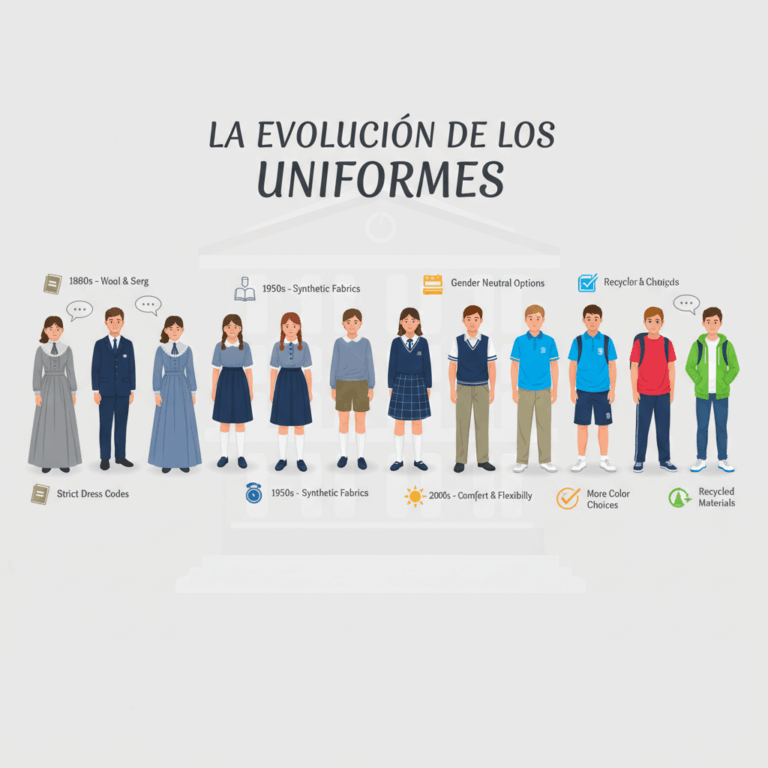
The evolution of uniforms reflects changes in functionality and culture over time, adapting to new needs and contexts.
Since ancient times, uniforms have served to identify and distinguish groups, especially in military fields, with great visible transformations.
This section explores how military uniforms evolved from ancient times to the 19th century, showing different phases and styles.
Military uniforms in ancient times and the Middle Ages
In ancient times, Roman soldiers wore lorica segmentata, distinctive armor that combined protection with an intimidating, hierarchical image.
During the Middle Ages, knights incorporated heraldic emblems into their armor to clearly distinguish allies and enemies on the battlefield.
These visual elements reinforced military identity and purpose, as well as facilitating combat communication and group cohesion.
Transformations in the 17th to 19th centuries
The 17th and 18th centuries marked the beginning of standardization with bright colors and designs made of military uniforms, such as the emblematic British red jacket.
During the Napoleonic Wars, uniforms incorporated ornamental details and high hats with gold embroidery, symbolizing greatness and discipline.
At the end of the 19th century, functional elements such as the German pickelhaube helmet combined fashion and practicality, integrating distinctive range and protection.
Changes in the 20th and 21st centuries
The 20th and 21st centuries are witnessing a profound transformation in uniforms, marked by simplification and technological adaptation.
This period stands out for the evolution in functionality and materials, both in military and health fields, reflecting new social and technical demands.
Advances in comfort and camouflage have redefined uniform design, emphasizing practicality and efficiency.
Simplification and functionality in world wars
World wars prompted the simplification of uniforms, prioritizing comfort, durability and camouflage over ornamentation.
Stronger materials and less elaborate designs allowed soldiers to better adapt to the extreme conditions of modern combat.
This functional approach reshaped military dress, abandoning bright colors for more discreet patterns that facilitated survival.
Technological innovations and modern camouflage
Today's camouflage uses nature-inspired patterns and advanced technology to fit various environments and terrain.
The use of smart fabrics and innovative materials improves the strength, comfort and adaptability of modern military uniforms.
These innovations allow greater efficiency in the field, using colors and textures that confuse the enemy and facilitate mobility.
Evolution of health uniforms until today
Sanitary uniforms have evolved from long garments to practical outfits, focused on comfort and ease of cleaning.
Since the influence of Florence Nightingale, we moved from dresses with caps to more functional clothing, including modern pants and fabrics.
Currently, identification is based on colors, plates or institutional protocols, taking into account the professionalization and mobility of personnel.
Cultural and symbolic aspects
Uniforms not only serve a practical function, but also convey deep cultural values and symbolism in various societies.
The colors and emblems present on the uniforms represent identity, authority and belonging to certain groups or professions.
This section addresses how these visual elements reveal social meanings and the impact they have on public and professional perception.
Meaning of colors and emblems
Colors in uniforms denote characteristics such as bravery, discipline or peace; For example, red in military uniforms symbolizes power and courage.
Emblems and symbols, such as heraldic shields or insignia, communicate stories, ranks and affiliations, clearly distinguishing the bearers.
In nursing, white is associated with purity and cleanliness, reinforcing the ethics of care and trust in the healthcare field.
These visual elements promote internal cohesion and external recognition, creating a universal symbolic language in the uniforms.
Decorations and badges
Decorations are visible recognitions of merit, worth or seniority, and reinforce respect within military and professional hierarchies.
Badges, such as patches and plates, allow specific roles, experience and training to be identified, facilitating organization and respect for order.
In the past, these symbols were exclusive to senior officials, but currently they extend to all staff, democratizing their use.
Furthermore, decorations influence morale and prestige, being a tangible form of honor and social recognition.
Curiosities and highlights
Many elements of current uniforms have a functional and symbolic origin that reflects the history and evolution of each profession or army.
These often overlooked details tell design stories designed to enhance utility or reinforce group and social identity.
This section reveals curious facts about uniforms and their impact beyond practical use, showing their cultural and professional role.
Original objectives of the uniform elements
Bright colors on military uniforms helped maintain morale and facilitate quick identification in battle, although they increased risks.
The famous cap in nursing indicated rank and training, originating in religious habits and evolving into professional symbols.
Elements such as embroidery and tall hats in ancient times showed hierarchy and prestige, also serving to intimidate and unite soldiers.
With the advent of camouflage, the goal became practical protection, reducing visibility and increasing the chances of survival.
Social and professional impact of clothing
Uniforms establish a clear identity, generate professional pride and facilitate cohesion within specific groups or institutions.
Beyond function, they influence social perception, granting authority, trust and recognition to those who carry them.
In professions such as health, clothing helps differentiate roles, improve communication and promote hygiene and safety in the environment.
Thus, clothing acts as a bridge between tradition, functionality and the strengthening of public and professional image.