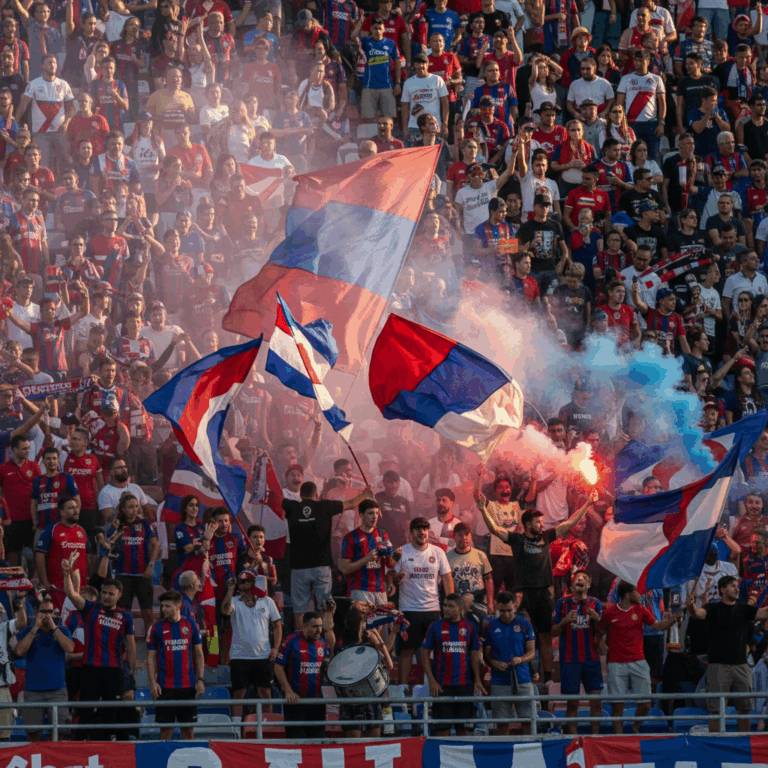
Rituals and traditions of the fans
The fans constitute a social phenomenon where football transcends sports. Fans create a world of rituals that reflect their passion for the club.
These rituals are manifested in clothing, chants and symbols that strengthen collective identity and connection with the team and other members.
With each match, the fans express a community united by traditions and superstitions that mobilize energy and emotion in the stadiums.
Clothing and symbols in the stadium
The fans adopt club colors through t-shirts, scarves and flags, creating a visual sea that identifies and represents the group's passion.
Symbols, from banners to elaborate mosaics, are essential elements that communicate messages of support and reflect the history and values of the club.
This visual style is complemented by the fixed location of fans in the stadium, consolidating shared rituals and a unique atmosphere during matches.
Superstitions and customs during matches
Superstition is a fundamental part: from putting on clothes backwards to crossing your fingers, each action seeks to attract good luck for the team.
These customs remain alive in Latin America and Europe, reinforcing the sense of belonging and symbolic control in the face of the uncertainty of the game.
Furthermore, the repetition of these rituals in company strengthens the brotherhood and collective experience of the fans.
Songs and musical expressions in football
Singing in stadiums is a unique form of expression that unites fans around their football passion. These songs reflect collective identity and emotions.
Their music and lyrics come from various cultural sources, and have been transformed over time to accompany and animate each encounter with strength and feeling.
In addition, the chants play a social role, strengthening ties between fans and creating a vibrant and recognizable atmosphere in each stadium.
Origin and evolution of court songs
Field songs emerged from popular melodies such as marches, rock and tango, adapted to accompany football and express the passion of the public.
Over time, these songs evolved from simple festive breaths to complex repertoires loaded with diverse emotions, from joy to intense rivalry.
This evolution also reflects social and political changes, since letters and styles became richer and diversified over the decades.
Themes and styles of songs
The songs address varied themes such as love for the club, jokes on rivals and the expression of social values, all through melodies adapted from different musical genres.
Styles ranging from rhythmic, catchy rhythms to sentiment-laden ballads are used to convey messages in the stadium, inciting collective participation.
These styles allow fans to create unique repertoires, which identify and differentiate each group based on its history and cultural context.
Social and emotional function of songs
The songs function as a vehicle of identity and social cohesion, where fans feel part of a larger community united by their common passion.
In addition, they play an important emotional role, expressing and channeling feelings such as joy, hope, anger or sadness during the game.
This phenomenon strengthens the sense of belonging and generates shared moments that transcend the match, building football culture.
Passion and collective behavior
Football passion is intensely lived in the group, where each fan contributes to the emotional climate of the stadium through their voice and gestures.
Group behavior creates a deep sense of belonging, where anonymity becomes a force to strengthen common identity.
This bond drives shared traditions that shape the culture of the fans beyond the result of the match, building a collective memory.
The role of anonymity and group identity
Anonymity allows fans to express themselves without standing out individually, generating a collective voice that unites all fans.
This sense of group identity creates a space where personal differences are diluted, prioritizing love and loyalty to the club.
The sum of anonymous voices forms a powerful chorus that keeps passion and cohesion alive inside the stadium and outside of it.
Meaning of silence in the stadium
Silence in the stadium is not absence, but a strong message: it can symbolize defeat, demoralization or tense expectation.
For the rival fans, the opponent's silence can be a source of ridicule, intensifying the rivalry and emotional pressure of the match.
Thus, silence acquires an essential communicative value, which complements the usual songs and expressions in football culture.
Culture and rivalries in football
Football culture is characterized by the construction of a collective identity, where each fan develops their own codes and traditions that define their style.
These codes include gestures, expressions and behaviors that reinforce the sense of belonging and unite fans with their rivals.
Rivalries in football are deep manifestations of love and hate, where passion is expressed intensely in each match between opposing teams.
Construction of identity and own codes
The fans create unique identities through symbols, colors and exclusive rituals that differentiate each group and consolidate their history.
These codes include everything from the way of singing to body language, which together generate a feeling of brotherhood and belonging.
Identity is also reflected in unwritten rules that regulate behavior inside and outside the stadium, maintaining group cohesion.
Rivalries and expressions of love and hate
Football rivalries channel contradictory emotions, expressing both unconditional admiration for the club itself and intense rivalry towards the opponent.
This phenomenon is manifested in songs, flags and provocations that reinforce emotional tension and the bond with the fans.
Furthermore, these expressions contribute to defining the history and culture of each club, being a central driver of football passion.