Analysis of the context and its importance
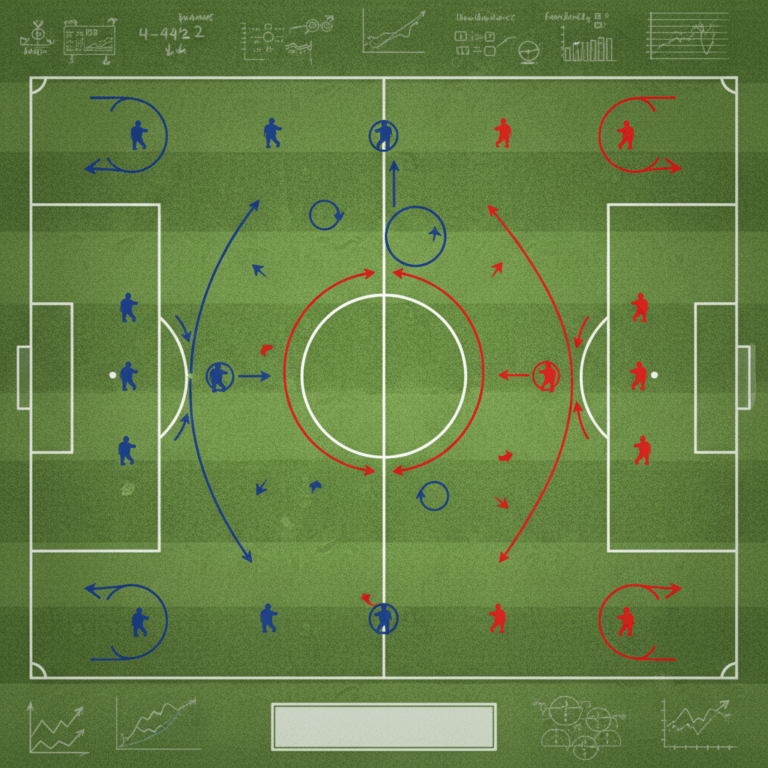
Context analysis is essential to develop effective tactical strategies. It allows you to understand the dynamics of your own team and your rival, facilitating making the right decisions.
This detailed evaluation helps identify playing patterns and strengths, essential for planning training that reflects real competitive situations and optimizes performance.
Identification of game patterns
Recognizing patterns is key to anticipating movements and responses during the game. This involves observing repetitive behaviors and habitual strategies of both teams.
This identification allows the coach to design specific exercises that reinforce the defense or attack according to the trends detected, improving the competitiveness and adaptability of the team.
In addition, knowing the opponent's habits makes it easier to create smarter game plans, increasing the chances of success in different sporting contexts.
Use of technology and video analysis
The incorporation of technology, such as video analysis, is vital to observe tactical details that are not visible in real time, allowing an accurate review of each play and behavior.
This tool facilitates detailed study of both the team itself and the rival, identifying errors, successes and key moments to adjust strategies and improve collective performance.
Video analysis enhances communication between coach and players, since it shows specific aspects to correct or enhance, contributing to a more effective and dynamic tactical training.
Tactical periodization in training
Tactical periodization is a methodology that jointly integrates the physical, technical and tactical aspects in training, seeking complete and efficient preparation.
This approach favors the assimilation of the team's tactical model and allows workloads to be adjusted to optimize performance without falling into excessive fatigue.
Integration of physical, technical and tactical elements
Integrating these elements means designing training where the player simultaneously develops their physical condition, technical skills and tactical understanding.
This combination reflects the real demands of competition, promoting holistic preparation that improves decision making in dynamic situations.
By combining these components, a balanced progression is achieved that enhances both the athlete's body and mind for competitive play.
Training design based on the tactical model
Training is structured based on the tactical model that the coach wants to implement, focusing on situations and tasks that the team will face in the game.
This allows the exercises to be highly specific, simulating real events and facilitating the automation of effective responses.
In this way, the team strategically prepares to dominate the field and exercise control over the development of the match.
Load management and fatigue prevention
It is essential to alternate periods of high and low load to avoid overtraining and ensure optimal physical and mental recovery of the player.
Fatigue control improves concept assimilation and quality in tactical execution during sessions and in competition.
Furthermore, proper management positively influences injury prevention, maintaining long-term health and performance.
Continuous evaluation and adjustment of sessions
Constant evaluation allows measuring physical, technical and tactical progress, detecting areas that require reinforcement or modifications in the training plan.
Data and observations are used to adjust sessions according to individual and collective needs, ensuring continuous improvement.
This dynamic process ensures that the team remains aligned with strategic objectives and in optimal conditions for the competition.
Exercises and practical methods in the sessions
Practical exercises are essential for applying tactical concepts in a controlled environment. Simulating real situations helps players develop automatic and effective responses.
Furthermore, these methods allow training to be adjusted according to the tactical model designed, enhancing adaptation and improving decision-making on the field.
Simulations and reduced games
Simulations recreate specific game scenarios, making it easier for players to practice executing strategies under match-like conditions.
Reduced games favor intensity and concentration, allowing specific aspects such as pressure after loss or counterattack to be worked on in a more dynamic and focused way.
This type of exercise also improves communication and coordination between players, as it forces them to make quick decisions in limited spaces and with a greater frequency of interaction.
Training of specific roles
Assigning specific roles in training allows each player to focus their skills and responsibilities within the team's tactical model.
This method strengthens individual and collective understanding, guaranteeing that each member knows how to contribute in different phases of the game and tactical situations.
Furthermore, role training facilitates the development of technical and physical characteristics adapted to the particular demands of each position, optimizing overall performance.
Development of tactical thinking
The development of tactical thinking is essential so that players can quickly adapt to changing situations during the match.
This process involves improving the perception of the environment, anticipating movements and coordinating team actions to successfully execute strategies.
Perception, anticipation and coordination
Perception allows players to identify and process relevant information on the field, increasing their ability to make sound decisions.
Anticipation is based on predicting the actions of the opponent and the team itself, which improves response capacity and effectiveness in execution.
Optimal coordination between players guarantees synchrony in collective movements, reinforcing cohesion and tactical performance.
Psychological and environmental factors in performance
Psychological aspects, such as concentration and stress management, directly influence the quality of decisions and tactical execution under pressure.
Additionally, adapting to varying environmental conditions, such as weather or hobby, is key to maintaining consistent performance and responding effectively.