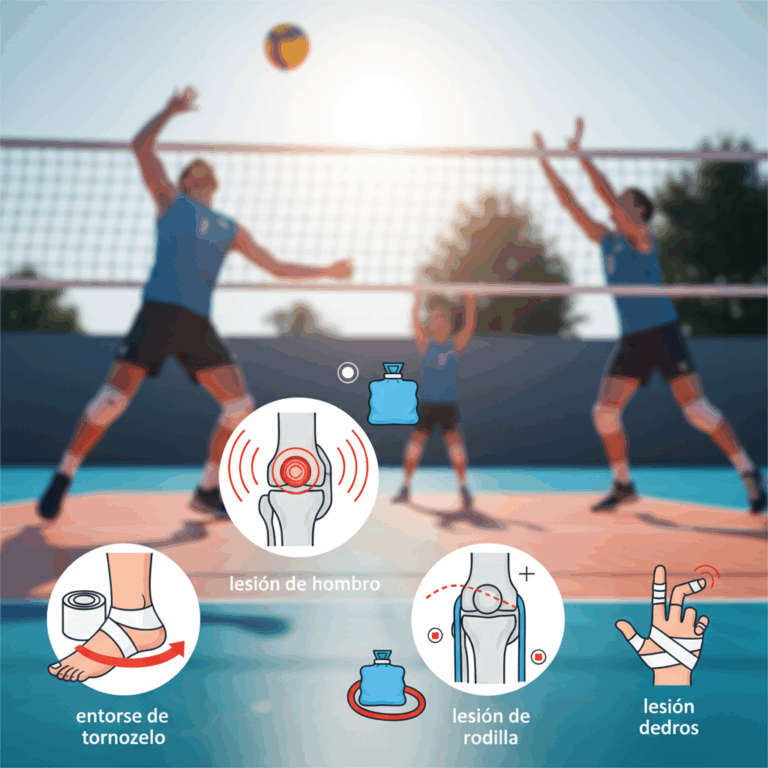
Types of common injuries in volleyball
Volleyball is a dynamic sport that involves repetitive movements and intense efforts, generating various frequent injuries in its practitioners. Knowing these injuries is essential for safe practice.
Injuries usually mainly affect the extremities and areas that withstand the constant impact, such as ankles, fingers, knees and shoulders. Identifying them allows for better management and prevention.
Sprains and injuries to extremities
Ankle sprains are the most common injuries, usually caused by improper landings after jumps. They present pain, inflammation and functional difficulty.
In addition, the fingers are also exposed to injuries during blockages and strong receptions, and may suffer sprains, fractures or joint dislocations that limit mobility.
The knees may suffer sprains or ligament tears due to sudden turns, in addition to previous pain caused by patellofemoral syndrome, affecting sports performance.
Tendonitis and overuse injuries
Rotator cuff tendonitis appears due to the constant repetition of movements above the head, causing pain and limitation in the shoulder during serve, finishing or blocking.
Another common injury is patellar tendonitis, linked to continuous jumping and landing, which generates inflammation and stiffness in the knee, affecting the ability to play.
Low back and back pain are also common, caused by repetitive posture and intense efforts, leading to chronic discomfort if not treated properly.
Strategies to prevent injuries in volleyball
Preventing injuries in volleyball is key to maintaining healthy and prolonged sports practice. Strategies should focus on proper physical and technical preparation.
Implementing muscle warm-up and strengthening routines helps prepare the body, increasing resistance and reducing the risk of damage during play.
Warming up and strengthening muscles
Warming up before training or competition increases blood flow and improves joint mobility, preparing muscles for intense activity.
Specifically strengthening the muscles of the legs, arms and core provides stability and support, crucial for supporting frequent jumps, turns and blocks.
Strength exercises combined with dynamic stretching help maintain flexibility and prevent injuries due to muscle tension and overload.
Appropriate technique and equipment
Correct technique in jumping, receptions and shots reduces unnecessary stress on joints, especially in the ankles, knees and shoulders.
Professional supervision and constant training encourage efficient execution, minimizing sudden movements or postures that can cause injuries.
Wearing sports shoes with good support and, if necessary, anklets or toe protectors, protects against impacts and improves stability during play.
Progression and care during training
Increasing the training load gradually allows the body to adapt and prevents overtraining, the main factor in overuse injuries.
Incorporating regular breaks and paying attention to signs of pain or fatigue helps prevent microinjuries and chronic problems.
Proprioception and flexibility exercises facilitate postural control and balance, important elements to avoid falls and sprains during play.
Treatment of injuries in volleyball
Proper treatment of injuries in volleyball is essential for a quick recovery and avoiding complications that prolong functional disability.
With timely management, major damage can be minimized and a safe return to sporting activity can be guaranteed, preserving the athlete's health.
First aid and initial management
In the event of an acute injury, it is vital to apply the RICE protocol: rest, ice, compression and elevation to reduce inflammation and pain.
The use of analgesics or anti-inflammatories should always be under medical supervision to avoid side effects or aggravation of the damage.
Avoiding moving the affected area and seeking professional care for deformities or severe pain is essential for a timely diagnosis.
This initial management prevents complications and facilitates subsequent rehabilitation processes, guaranteeing better results.
Rehabilitation and functional recovery
Physical therapy plays an important role in restoring mobility, strength and functionality after a sports injury.
The rehabilitation program includes specific therapeutic exercises to readapt the damaged area and strengthen muscles and joints.
It is crucial to progressively adapt loads to avoid relapses and maximize recovery without compromising long-term health.
In addition, constant monitoring with professionals ensures that the return to sports practice is safe and effective.
Key aspects for safe practice
Safety in volleyball depends on various factors including good sports education and adequate medical follow-up. These aspects prevent injuries and guarantee the well-being of the player.
Responsible practice helps identify risks, correct technical errors and maintain optimal physical condition, minimizing the chances of injury during play.
Importance of sports education
Sports education offers essential knowledge about correct techniques and prevention strategies, promoting healthy habits during training and competition.
Understanding the importance of warming up, strengthening and resting helps reduce the risk of common injuries in volleyball, while improving overall performance.
In addition, educating about warning signs such as pain or fatigue allows you to act in a timely manner, preventing small discomforts from becoming severe problems.
Medical consultation and professional follow-up
Regularly consulting with healthcare professionals ensures timely evaluations to detect and treat injuries, as well as obtain personalized care recommendations.
Medical monitoring allows rehabilitation and training programs to be adjusted, facilitating correct recovery and safe return to sport.
In the event of persistent symptoms or serious injuries, professional care is vital to avoid complications and promote the overall health of the volleyball athlete.