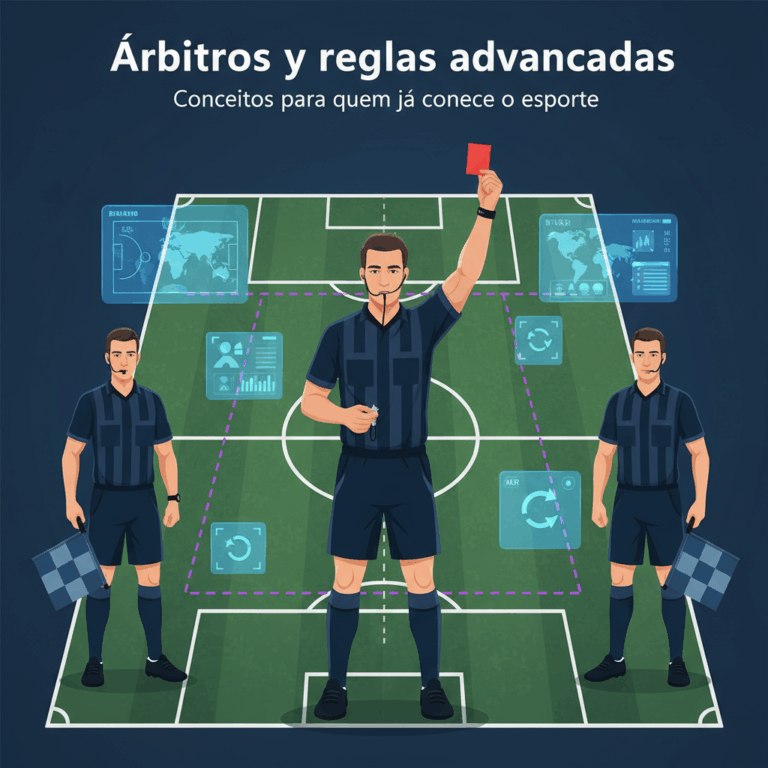
Role and authority of the referee in modern football
In modern football, the referee he is much more than a simple judge; He is primarily responsible for ensuring the fairness and fluidity of the game. His authority is absolute throughout the match, from the inspection of the field to the end of the match.
This figure does not act alone, but works with a referee team made up of assistants and fourth referee, who collaborate to observe key details such as offside or ball kicks. This is how comprehensive and precise refereeing is sought.
Functions and referee team
The referee must apply the rules of the game to ensure a fair and entertaining match. It seeks to avoid excessive interventions that break the natural dynamics of the match, preserving the essence of the football spectacle.
The referee team supports specific aspects: the assistants monitor offside positions, while the fourth referee controls substitutions and sanctions that may influence the order of the game.
Cooperation between its members allows for constant surveillance and orderly management of the party, facilitating the detection of infractions and maintaining respect on the field.
Irrevocable decisions and authority in the game
The referee's decisions based on the events that occurred are irrevocable during the game. His word is final, guaranteeing certainty and order in the development of the match.
His authority spans from the start to the end of the match, including prior inspections and strict enforcement of regulations to maintain impartiality and discipline on the field.
This power seeks to balance sporting justice with the continuity of the game, avoiding unnecessary interruptions that affect the experience of players and spectators.
Technologies and communication in arbitration work
Technology has transformed refereeing, improving precision and transparency in decisions during the match. VAR is the key tool for reviewing controversial plays.
Additionally, public communication expands understanding of the public and equipment, while body cameras provide greater control and security in the field.
Use of VAR and review of plays
VAR allows the referee to review incidents such as penalties or millimeter offside, ensuring fair decisions and avoiding visible errors at the moment.
Thanks to VAR, controversies are reduced and the integrity of the match is protected, reviewing plays that are not evident from the perspective of the main referee.
This technology does not intervene in minor plays, seeking to maintain the fluidity of the game and respecting the natural rhythm of the game in most of its situations.
Public communication of decisions
VAR decisions are communicated over the public address system, allowing players, coaches and the public to know the reasons behind the referee's determinations.
This transparency fosters trust in the refereeing process, reduces uncertainty and contributes to a more respectful environment within the stadium.
Additionally, audible explanations strengthen the bond between referees and spectators, who better understand the context of each ruling or review.
Body cameras for control and security
Cameras carried by referees record incidents on and off the field, creating a live-action file for further analysis and possible sanctions.
This device deters unsportsmanlike behavior, as players know that any inappropriate behavior is documented on video.
By recording the interaction of referees with players, these cameras also protect the referee team against attacks or unjustified claims.
Advanced rules and their impact on the game
The advanced rules seek to improve the dynamics of football, promoting a more agile and fair pace. These modifications directly influence the strategy and behavior of the players on the field.
Its implementation is considered essential to maintain emotion and fluidity, avoiding loss of time and guaranteeing a more entertaining and balanced game. The referee is key in applying these rules accurately.
Temporary restrictions for goalkeepers
Since 2025, goalkeepers have a limit of 8 seconds to resume play after controlling the ball with their hands. This restriction seeks to avoid delays and encourage a constant and dynamic rhythm in the match.
If the goalkeeper exceeds this time, the referee will sanction a corner for the opposing team, encouraging speed in delivery and reducing deliberate time-losing strategies.
This rule, similar to other fast sports rules, promotes more active football. The referee must clearly measure and indicate this time, making this new rule visible to players and spectators.
Exclusive dialogue with captains
Only team captains are authorized to speak directly with the referee during the match, a measure that reinforces respect and formality in communication on the field.
This protocol allows order to be maintained and avoids unnecessary confrontations or distractions, making it easier for dialogue to be clear, orderly and with responsible representatives of each team.
The referee can thus manage interventions by mediating more effectively, limiting discussions and promoting an environment of respect and discipline between players.
Arbitration tactical strategies and regulations
Current refereeing strategies seek to balance the fluidity of the game with regulatory rigor. Tactical regulations are applied that guide decision-making to maintain order and justice on the field.
These regulations include advanced interpretations of complex situations, adapting to the tactical evolution of teams and the demands of modern football.
Application of the law of advantage and sanctions
The law of advantage allows the referee to let the game continue if the infraction does not harm the offensive action of the affected team, favoring the continuity and dynamism of the match.
This application requires criteria to assess the impact of the offense, always prioritizing sports justice and spectacle. The sanctions are adjusted to the seriousness and consequences of each infraction.
When multiple fouls occur in a play, the referee sanctions the most serious one, considering the physical and tactical damage to guarantee effective and fair control.
The “Wenger” Law and new offside criteria
The “Law Wenger” is an innovative proposal that redefines the criterion of offside, sanctioning only if the attacker's entire body is ahead of the last defender.
This change seeks to reduce interruptions and favor spectacle, allowing more offensive and attractive football for players and spectators.
Currently in the experimental phase, this law could transform defensive and offensive tactics, driving an evolution in the interpretation of key plays.