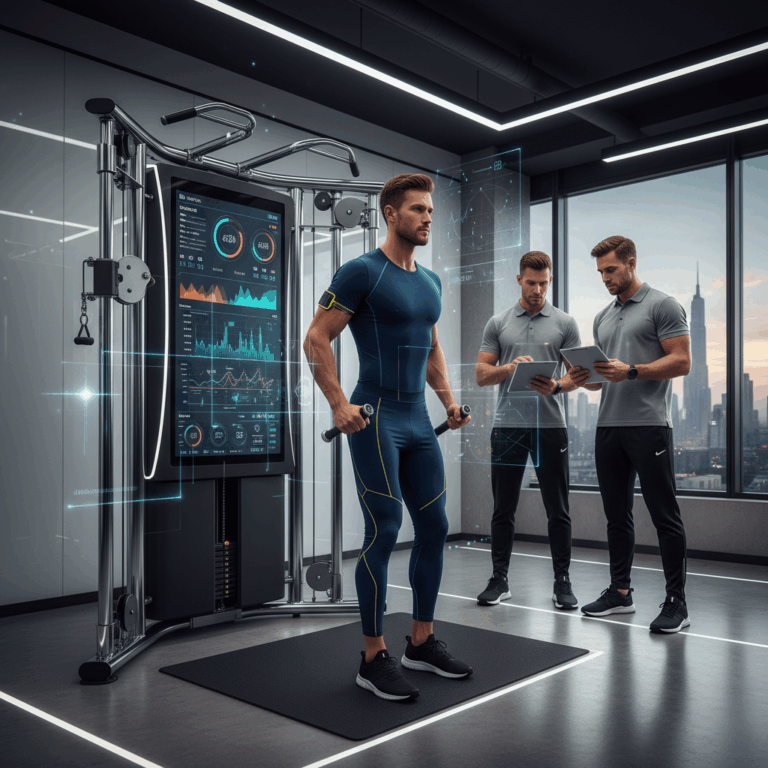
Fundamentals of professional training
The professional training high performance requires precise and personalized planning to maximize the potential of each athlete. This foundation is essential to achieve sporting success.
Combining various physical, technical and psychological approaches allows for comprehensive preparation. Thus, the forceful and balanced development that a professional athlete demands is ensured.
Furthermore, the use of advanced methods and continuous adaptation are key to achieving and maintaining optimal levels during competitive seasons.
Importance of personalization and planning
The personalization of training allows loads and exercises to be adapted according to the individual characteristics of the athlete. This improves effectiveness and reduces injury risks.
Structured planning, through microcycles, mesocycles and macrocycles, makes it easier to reach peak performance at key moments in the competition.
Technical and strategic aspects are also integrated that complement the physical work, creating a coherent process oriented to specific objectives.
Integrated physical, technical and psychological aspects
Professional training not only develops strength and endurance, but includes technical skills that optimize sports performance.
The psychological dimension is essential, since it strengthens concentration, motivation and emotional control, directly impacting competition.
Integrating these areas promotes a complete and balanced development of the athlete, improving their ability to face both physical and mental challenges.
Advanced methods in physical preparation
Advanced methods in physical preparation optimize performance through specific techniques that stimulate different types of hypertrophy and resistance.
These innovative techniques combine strength work, muscle fatigue and active recovery to maximize gains without overloading the athlete.
Furthermore, its application must be carefully dosed and adapted to each athlete to guarantee long-term benefits without risks of injury.
Superseries, pre-fatigue and post-fatigue
Supersets consist of performing consecutive exercises without rest, increasing muscle intensity and stress to stimulate hypertrophy.
The pre-fatigue technique involves previously fatiguing a muscle with isolation exercises before working compound movements, enhancing effort.
On the other hand, post-fatigue works first on compound exercises and then on isolation exercises, seeking maximum muscle fatigue and specific adaptations.
Cluster sets and eccentric training
Cluster sets divide series into small blocks with short rest between repetitions, allowing you to work with higher loads and improve strength.
Eccentric training focuses on the negative phase of movement, promoting greater muscle gain and injury prevention through meticulous control.
Both methods are highly effective and complementary, capable of adapting to different levels and objectives in professional training.
Variability, individualization and progression
Variability in stimuli prevents premature adaptation and maintains the effectiveness of training, giving optimal body responses.
Individualization adjusts the loads and techniques to the athlete's profile, taking into account their physical condition, objectives and response to training.
Controlled progression is essential to safely increase loads and complexity, avoiding overtraining and promoting constant progress.
Technology applied to training
Technology has revolutionized the professional training by providing precise tools to measure and analyze performance. This allows for constant customization and adjustment.
Advanced devices and digital systems offer real-time monitoring, facilitating the identification of areas for improvement and increasing efficiency in each session.
The use of artificial intelligence and online platforms expands the possibilities to optimize and monitor progress, enhancing the connection between coach and athlete.
Biomechanical measurement and analysis devices
Devices with GPS, accelerometers and inertial sensors allow accurate movement, speed and load data to be recorded during training. This provides valuable information to adjust strategies.
Biomechanical analysis delves into the technique and posture of athletes, correcting gestures that could limit performance or cause injuries. Thus, each movement is perfected.
These technologies are key tools to individualize plans and maximize efficiency, in addition to preventing risks, taking care of the athlete's health in the long term.
Artificial intelligence and online monitoring
Artificial intelligence uses algorithms to process large volumes of data, facilitating performance prediction and early detection of fatigue or wear.
Online monitoring platforms offer constant communication between the athlete and the technical team, allowing immediate adjustments to the training program.
These digital solutions allow remote and accessible monitoring, improving adherence, motivation and precision in the planning of sports strategies.
Recovery and mental training
Recovery is key to maintaining optimal performance and avoiding injuries in elite athletes. Combining physical and mental techniques ensures a comprehensive recovery.
Mental training strengthens concentration, motivation and emotional control, essential aspects that complement the physical and technical development of the competing athlete.
These practices promote a necessary balance between body and mind, promoting adaptability and resilience to the demands of high performance.
Visualization techniques and sports psychology
Visualization consists of imagining success scenarios and overcoming obstacles, reinforcing the confidence and mental preparation of athletes before competing.
Sports psychology provides strategies to manage anxiety, improve concentration and increase motivation, decisive factors for performance under pressure.
These mental tools are integrated with personalized coaching, promoting self-awareness and emotional control in highly demanding situations.
In addition, they help build mental routines that optimize the response to unforeseen events during training and competition.
Recovery and prevention strategies
Active recovery, which includes physical therapy and controlled rest, facilitates muscle repair and reduces risks of overtraining or chronic injuries.
Personalized nutrition and restful sleep are fundamental pillars for physical regeneration and hormonal balance after intense sessions.
Likewise, prevention is based on the early detection of fatigue and the incorporation of treatment techniques that prevent relapses and prolong sports life.
Importance of rest and mental recovery
Mental rest is as crucial as physical rest, allowing the athlete to better manage competitive stress and maintain clarity in decision making.
Practicing relaxation and meditation techniques helps reduce tension and improve sleep quality, a vital aspect for comprehensive recovery.