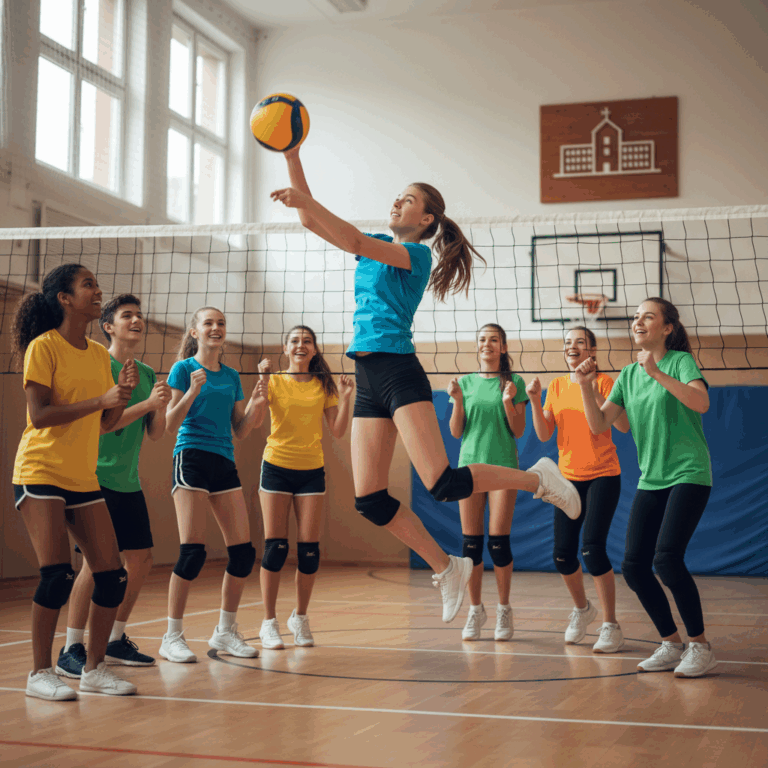
Physical benefits of school volleyball
School volleyball contributes significantly to the physical development of children and adolescents, enhancing essential skills for their healthy growth.
Regular practice of this sport improves abilities such as coordination, agility and resistance, strengthening the body in a comprehensive way.
In addition, the physical effort required boosts cardiovascular and muscular health, promoting optimal condition and preventing diseases.
Development of motor skills
School volleyball requires and improves hand-eye coordination, essential for controlling the body and executing precise movements during the game.
Young people who practice this sport develop agility and speed of reaction, vital skills for their physical performance and daily activities.
Physical resistance and balance capacity are also strengthened, vital to maintaining good physical condition and preventing injuries.
Improved cardiovascular and muscle health
Constant activity in volleyball increases aerobic capacity, which translates into a stronger and more efficient heart, reducing health risks.
This sport strengthens muscles and bones, promoting harmonious physical development and helping to prevent problems related to age or a sedentary lifestyle.
Likewise, improved blood circulation and breathing contribute to better general well-being and greater energy for daily activities.
Social and emotional values promoted
School volleyball is essential to cultivate social and emotional values in young people, strengthening their comprehensive development and coexistence.
Through the practice of this sport, students develop interpersonal skills that are essential for their lives inside and outside the school environment.
Promotion of cooperation and teamwork
School volleyball encourages cooperation between peers, showing that success depends on joint effort and effective communication.
Players learn to collaborate and respect the functions of each member, strengthening ties and promoting a positive environment.
This team spirit improves social skills and helps students adapt and resolve conflicts constructively.
Impact on self-esteem and emotional well-being
Participating in school volleyball generates a sense of belonging that raises self-esteem and contributes to the emotional well-being of young people.
Experiences of success and improvement in matches and training strengthen confidence and motivate constant personal growth.
Support from peers and teachers in this context fosters a safe environment for affective development and emotional strength.
Emotion management and fair play
School volleyball teaches how to manage emotions such as frustration and joy, promoting balanced and healthy emotional development.
In addition, it promotes respect for rules and fair play, essential values for peaceful coexistence and personal integrity.
Importance of fair play
This sport, without aggressive physical contact, facilitates the learning of mutual respect and self-control, reinforcing positive behaviors in young people.
Volleyball as an educational tool
School volleyball is not only a physical activity, but also a powerful educational tool that promotes comprehensive student learning.
Through its inclusion in physical education, it promotes healthy habits and enhances cognitive and motivational skills important for development.
Integration into physical education and healthy habits
Incorporating volleyball into physical education encourages the adoption of healthy habits from childhood, encouraging regular physical activity.
Students learn values related to discipline, responsibility and body care, key elements for their long-term well-being.
In addition, this practice helps young people understand the importance of staying active to prevent diseases and maintain a balanced lifestyle.
Cognitive development and student motivation
Participation in school volleyball favors cognitive development, improving concentration, attention and decision making in other academic fields.
This dynamic and collaborative activity motivates students, generating interest and commitment to physical education and other subjects.
Team play promotes problem solving and strategic thinking, skills that enhance learning and creativity.
Social and preventive impact of school volleyball
School volleyball plays a crucial role in preventing risky behavior, offering young people a structured and positive space for their development.
In addition, it improves school coexistence by promoting values such as respect and cooperation, creating a more harmonious and safe environment for everyone.
This sport also acts as a preventive tool by reducing stress and promoting healthy lifestyles, contributing to general well-being.
Prevention of risk behaviors and improvement of coexistence
Regular school volleyball diverts young people's attention from negative activities, such as substance use or violence, by keeping them active and engaged.
Sport promotes peaceful coexistence by teaching social skills that help resolve conflicts peacefully and respectfully.
The sense of belonging and working together strengthen mutual respect, creating a school environment where solidarity and tolerance predominate.
Productive occupation of free time
School volleyball offers students a healthy option to use their free time, avoiding boredom and exposure to harmful influences.
By spending time in sports activities, young people develop discipline and responsibility, qualities that are positively reflected in other areas of their lives.
This active occupation also improves physical and mental health by promoting regular physical activity and reducing a sedentary lifestyle.