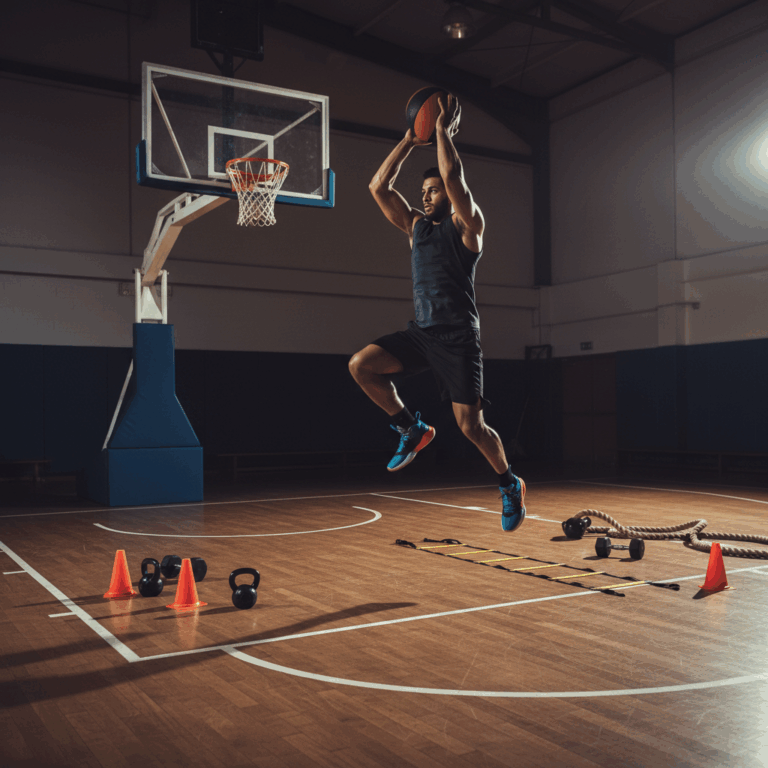
Fundamentals of physical training in basketball
The physical training in basketball requires a combination of strength, speed and explosion to improve performance on the court. These capabilities allow for precise and powerful movements.
Additionally, a comprehensive approach includes technique and flexibility, which along with physical preparation ensure optimal performance and long-term injury prevention.
Importance of muscle strength
The muscle strength it is essential to withstand intense efforts, such as jumping, rapid changes of direction and physical contact with opponents during the game.
Working on strength through global and functional exercises develops the large muscle groups necessary to maintain solid posture and endurance during matches.
In addition, strength allows greater explosiveness and control in movements, improving the ability to execute technical actions effectively and reducing the risk of injury.
Relevance of speed and explosion
The speed and explosion they are essential for quick movements, starts and changes of pace that define effectiveness in basketball.
Plyometric exercises, such as jumps and sprints, enhance these qualities, promoting quick responses and dynamic movements on the court.
A solid foundation of strength is key to optimizing explosiveness and controlling joints well, helping to prevent injuries and improve performance.
Key exercises to develop strength
The development of the strength in basketball you should focus on exercises that involve large muscle groups and are functional for the sport.
In this way, the physical capacity to withstand the effort during matches and improve technical execution on the field is enhanced.
Global and functional exercises
Global exercises such as squats, deadlifts and bench presses are ideal for working on strength in a comprehensive and functional way.
These movements recruit several muscles at once, helping to improve the overall power and stability needed to train and compete.
It is vital to perform the concentric and eccentric phases with control, maintaining explosiveness without losing mobility or increasing muscle mass without control.
Specific complementary exercises
Exercises such as femoral curls, pull-ups and heel lifts focus on strengthening muscle groups essential for individual performance.
These movements complement the overall strength and help correct imbalances or strengthen vulnerable areas for injury prevention.
Including these exercises guarantees balanced development and contributes to better artistic and physical control during the game.
Structure of the strength routine
An effective strength routine is ideally scheduled in three weekly sessions, alternating days to facilitate muscle recovery.
The average volume and adequate intensity are key to progressing without overloading the body, ensuring optimal adaptations.
This structure promotes sustained development and allows strength to be combined with other physical aspects without risks of excessive fatigue.
Development of speed and explosion
The development of the speed and the explosion it is crucial for basketball as it improves the ability to perform fast and powerful movements.
The combination of plyometric training with a solid strength base is essential to enhance these qualities and prevent injuries.
Recommended plyometric exercises
Plyometric exercises are ideal for increasing leg power and quick reaction capacity in basketball.
Activities such as bouncing jumps, jumping squats, and side jumps effectively improve muscle coordination and explosiveness.
These exercises should be performed with proper technique and progression to avoid overloads and maximize benefits in speed and power.
Solid strength foundation for injury prevention
A strong muscular base is essential to control the joints during explosive and fast movements on the court.
Previous strengthening with global strength exercises helps reduce the risk of injury, improving joint stability and resistance.
Integrating strength work with plyometrics guarantees balanced training that optimizes sports performance and protects the athlete's health.
Postural and core control in training
The postural control and a strong core are essential to maintain balance and stability in basketball, improving movement execution.
These aspects help prevent injuries and increase efficiency in movement, jumping and tactical actions during matches.
Exercises to strengthen the core
Strengthen the core it involves working the abdominal and lumbar area with exercises such as front and side planks that improve central stability.
Dynamic abs are also important for developing resistance and trunk control, facilitating agile and coordinated movements.
Including these exercises in the routine promotes better physical performance and correctly supports the body during intense efforts on the court.
Specific movements for postural control
To improve the postural control, it is key to perform movements that involve alignment and balance, such as unilateral exercises and controlled movements.
Functional exercises that work on stability on unstable surfaces enhance proprioception and strengthen muscle stabilizers.
Mastering these movements helps maintain optimal posture, improving technique and reducing the risk of injury during play.