Importance of the mind in basketball
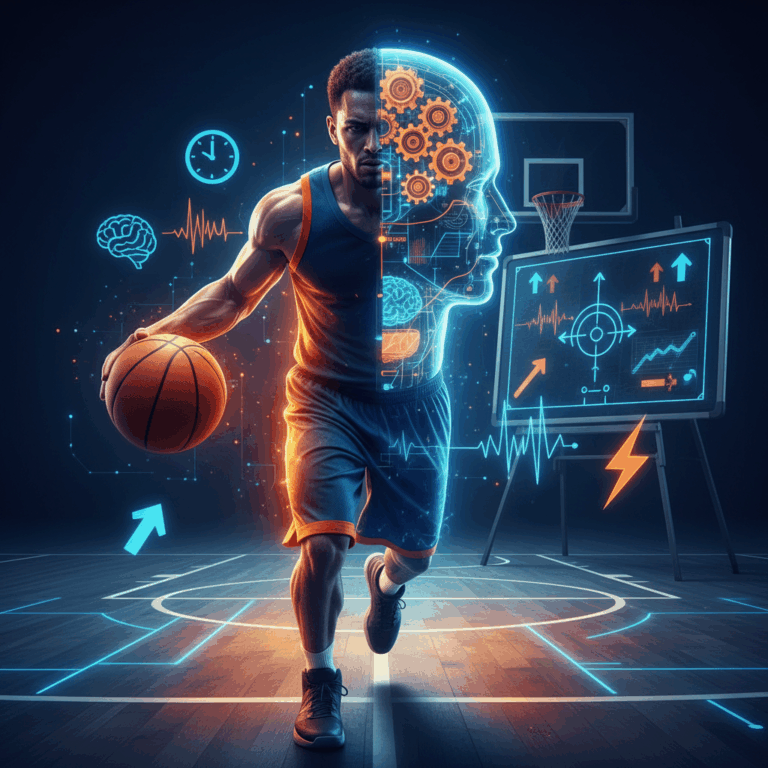
The mind plays a crucial role in the performance of basketball players, affecting their individual and collective performance. A key aspect is self-confidence that drives decision making at critical moments.
Additionally, emotional management and resilience allow players to adapt to mistakes and pressures. Without this mental balance, even physical or technical talent can be overshadowed.
Sports psychology in basketball works to strengthen these skills, thanks to techniques that improve concentration and the ability to cope with difficult situations within the game.
Role of self-confidence in performance
Self-confidence is the basis for a player to act with confidence and mental clarity, especially in high-pressure situations during the match. This trust facilitates correct decisions and better control of the game.
An optimal level of self-confidence not only improves individual performance, but also positively influences team morale, generating an environment of security and competitiveness.
Therefore, training the mind to strengthen the belief in one's own abilities is essential to achieve constant and outstanding performance on the court.
Emotional management and resilience during the game
Proper management of emotions is vital to maintaining concentration and preventing stress from affecting performance. Resilient players can recover quickly from mistakes or adverse outcomes.
This emotional adaptive capacity helps sustain effort and motivation throughout the game, even in the face of changing or challenging situations.
Resilience acts as a mental shield, allowing you to face pressure calmly and persist in the search for sporting goals despite difficulties.
Psychological techniques to improve performance
Psychological techniques in basketball are essential to optimize the performance of players in highly competitive situations. These tools allow you to strengthen your mind and maintain focus during the game.
Among the most effective techniques are concentration, mental visualization, motivation and simulation of pressure situations. Each one contributes to preparing the player to face challenges and maintain emotional control.
Constant training in these psychological skills is as important as physical and technical skills, as it significantly improves the ability to make decisions and sustain effort on the court.
Concentration and mental visualization
Concentration is crucial to maintaining attention in the game and avoiding distractions that negatively impact performance. Exercising it helps control stress and respond effectively at key moments.
Mental visualization consists of imagining plays, movements and game situations in detail. This practice anticipates events and improves confidence, reducing uncertainty during competition.
By combining concentration and visualization, players mentally prepare to execute actions accurately and quickly adapt to match changes.
Motivation and sustained effort
Motivation is the engine that drives players to maintain constant effort throughout the season, especially in the face of adverse circumstances or moments of fatigue.
Working on internal and external motivation helps cultivate a mentality of commitment and perseverance, essential to achieve individual and collective goals in basketball.
Additionally, a good motivational level improves response to challenges and increases the ability to overcome psychological barriers during play.
Simulation of pressure situations
Simulating pressure situations in training prepares players to maintain calm and emotional control in real matches. Allows you to develop strategies to manage stress and uncertainty.
These practices recreate highly demanding contexts, helping to improve self-confidence and quick decision making under pressure, fundamental skills in competitive basketball.
With this type of training, players learn to adapt better and respond effectively, increasing their performance when the game is more demanding.
Team mental dynamics and leadership
Mental dynamics within a basketball team is a key factor for its success. Leadership directly influences group cohesion and how players manage their emotions together.
A team with good emotional synchronization and effective leadership manages to face conflicts more easily, maintaining focus on sporting objectives and strengthening collective performance.
Sports psychology highlights that these mental elements are as important as technical skills to achieve consistent victories and a positive environment on the court.
Influence of leadership on group cohesion
Leadership in basketball, whether from the coach or key players, lays the foundation for strong cohesion among team members. A motivating leader unites the group toward common goals.
Additionally, clear leadership creates an environment of trust where communication is facilitated and tensions are reduced. This enhances collaboration and mutual support at crucial moments in the game.
Group cohesion, fostered by good leadership, translates into synchronization and effectiveness on the court, fundamental elements for successful performance.
Emotion management and conflict resolution
Proper management of emotions within the team is essential to prevent conflicts from affecting performance. Both players and coaching staff must learn to express and control their feelings.
Conflict resolution strategies allow differences to become opportunities for growth, improving interpersonal relationships and strengthening the group.
A team that manages its emotions well maintains harmony and focus during the game, thus managing to face adversity more effectively and maintain a good competitive environment.
Role of the sports psychologist in basketball
The sports psychologist is essential to help players identify and control their emotional patterns. This helps improve your mental stability during the game.
With this support, athletes learn to manage pressure, frustration and anxiety, aspects that can affect their performance and concentration on the court.
In addition, the psychologist works with specialized techniques so that the player maintains an emotional balance that enhances their competitive capacity and resilience.
Knowledge and control of emotional patterns
Understanding and controlling emotions is vital to avoid impulsive reactions that can harm performance. The psychologist teaches to recognize these internal signals.
With practice, players develop tools to regulate their emotional state, such as controlled breathing and positive self-talk, that help keep them calm.
This not only improves decision making but also protects mental health and allows you to better face the challenges of basketball.
Development of strategies for decision making
The sports psychologist designs strategies that reinforce the player's ability to decide effectively in situations of high pressure and uncertainty within the match.
These strategies include visualization exercises, scenario analysis, and simulations that mentally prepare you to respond quickly and confidently.
In this way, the player improves his cognitive control, reduces errors and optimizes performance, which positively impacts the team's final result.