Frequent injuries in basketball
In basketball, injuries are common due to the high physical demand and repetitive movements of the sport. This affects players of all levels.
Knowing the types of injuries and the most vulnerable body parts helps prevent and properly treat these conditions. Information is key to safe practice.
Main types of injuries
The most common injuries in basketball include ankle sprains, muscle strains and ligament injuries, which are caused by jumps, turns and sudden landings.
In addition, overuse tendonitis, stress fractures and bursitis are common, although to a lesser extent, they can affect sports continuity if not treated in time.
These injuries usually arise from constant pressure and overload on the joints during intense and prolonged play, requiring specialized care for recovery.
Parts of the body most affected
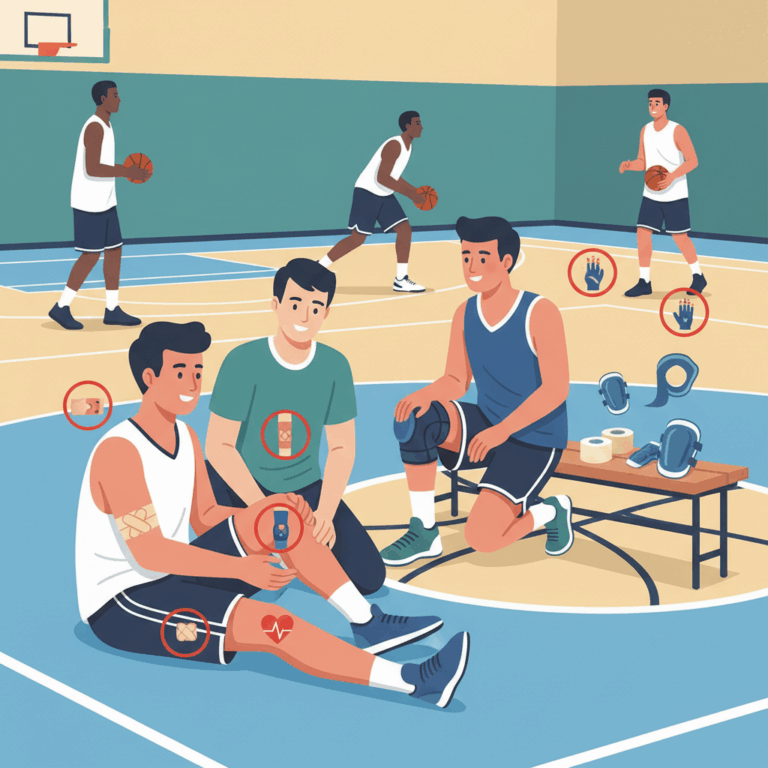
The ankles and knees are the areas most prone to injuries in basketball due to the large number of jumps, turns and changes of direction that are made.
The back also suffers muscle strains from forced postures and repetitive movements, while the fingers can be injured with constant impacts and falls.
The hip is vulnerable to muscle strain from wide openings and explosive movements, which can cause chronic pain if not properly prevented.
Factors that cause injuries in basketball
Basketball injuries usually originate from a combination of repetitive movements, intense physical demands, and external factors such as equipment and playing conditions.
Understanding these factors is essential to implement prevention strategies and reduce the risk of suffering injuries during sports practice.
Repetitive movements and physical demand
Basketball requires continuous jumping, turning and changes of direction, which causes overload on ligaments and muscles, especially the ankles and knees.
Constant repetition of these movements during training and matches increases the chance of sprains, tendonitis and other stress injuries.
Furthermore, the high cardiovascular and muscular demand can fatigue the player, increasing vulnerability to injury if physical effort is not adequately managed.
Inadequate technique and posture
Incorrect technique in jumps, landings or turns usually causes misalignments and undue tension in joints and muscles, favoring injuries.
Lack of professional supervision and lack of knowledge of correct postures increase the incidence of injuries that could be avoided with adequate training.
Inadequate posture also affects motor efficiency, generating compensations that produce imbalances and overloads in different parts of the body.
Equipment and playing conditions
Inappropriate or worn footwear does not provide the necessary support, increasing the risk of sprains and injuries to the feet and ankles.
Irregular or slippery surfaces can cause falls and sudden movements, contributing to the development of traumatic injuries.
A safe gaming environment and adequate equipment are essential to minimize risks and protect players while playing basketball.
Methods to prevent common injuries
Preventing basketball injuries requires a comprehensive approach that combines specific exercises and warm-up routines. These practices strengthen the body and minimize risks.
Adopting appropriate methods allows the player's physical health to be maintained and their performance to be prolonged, significantly reducing the incidence of sprains, strains and other damage.
Muscle strengthening and specific exercises
Focused muscle strengthening in the ankles, knees and hips is crucial to stabilizing the joints and preventing common basketball injuries.
Exercises such as squats, heel lifts and core work help improve endurance and muscle control, essential for explosive movements and changes in direction.
Including a regular strengthening program reduces overload of ligaments and muscles, preventing sprains and tendonitis resulting from intense and repetitive play.
Warm-up and proper stretching
A correct warm-up before training or a game prepares the body, increasing muscle temperature and improving elasticity to avoid injuries.
Subsequent stretches contribute to muscle recovery, reducing fatigue and stiffness, factors that can cause post-exercise strains and discomfort.
Implementing these habits contributes to maintaining joint mobility and flexibility, key elements for safe and effective performance in basketball.
Care and recommendations for players
Proper after-game care is essential to prevent injuries and maintain good performance. Rest and recovery allow the body to repair itself.
Paying attention to signs of fatigue and pain avoids major complications. Players should balance workouts with rest periods to avoid overtraining.
Importance of rest and recovery
Rest is essential for muscle repair and prevention of overuse injuries. Ignoring fatigue can trigger chronic problems.
Proper recovery includes restful sleep and gentle activities such as stretching, which help reduce stiffness and improve blood circulation.
Scheduling rest days prevents the accumulation of stress in ligaments and muscles, contributing to the player's sporting longevity and general health.
Medical consultation and preventive physiotherapy
Going to medical check-ups regularly helps detect any injury in early stages, facilitating effective and quick treatments.
Preventive physiotherapy strengthens the body, improves mobility and corrects imbalances, significantly reducing the risk of future injuries.
Additionally, a physical therapist can design personalized recovery and prevention programs based on the basketball player's specific needs.