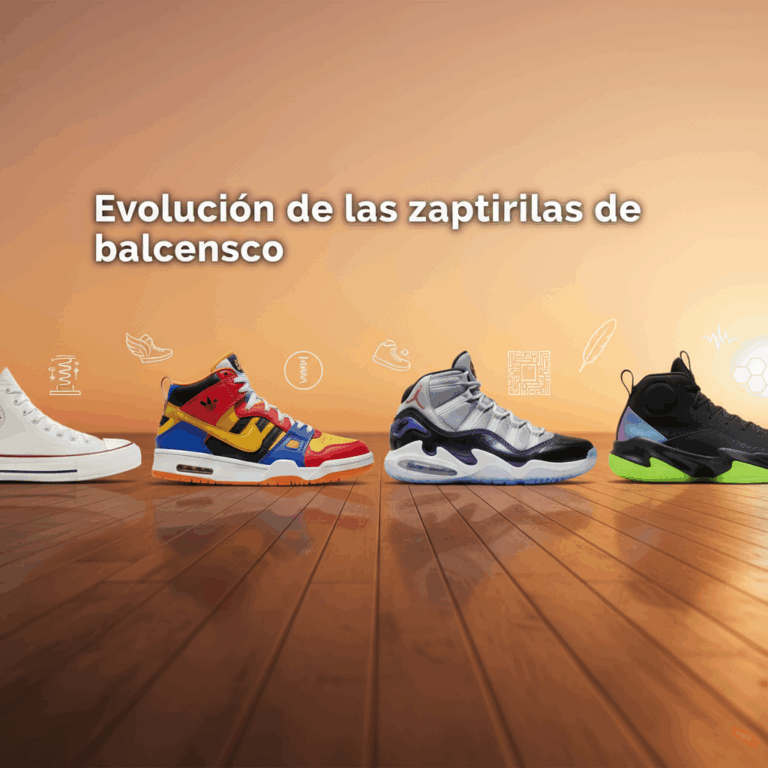
History of basketball shoes
Basketball shoes have undergone a notable evolution since the beginning of the 20th century, going from being simple adaptations of sports shoes to specialized pieces. Its development has been marked by innovations that improve the performance and protection of players.
This progress has been influenced by technological advances and design changes, which have established the foundation for modern sneakers, as well as impacting urban and sports culture over time.
First designs and initial evolution
The first basketball-specific sneakers appeared in 1917 with the Converse All Star, which incorporated canvas and rubber for greater comfort and grip. This design was revolutionary for its time and set an important precedent.
During the 1930s and 1940s, manufacturers began to focus on improving ankle support and traction, using new materials and models that defined the basic structure of basketball footwear. These advances boosted functionality on the court.
Iconic models from the mid-20th century
In the 70s and 80s, brands such as Nike and Adidas integrated science and technology into their designs, revolutionizing the market with emblematic models. A key example is the Nike Air Force 1, launched in 1982, with an air chamber to improve cushioning.
Later, in 1985, the Air Jordan I changed the paradigm by combining sports performance and style, becoming a global phenomenon that influenced both sports and urban fashion.
Key technological innovations
Basketball shoes have incorporated technological advances that revolutionized performance and comfort. These developments made it possible to improve the protection and fit of footwear, adapting to the needs of the player.
From innovative cushioning systems to specialized materials, technology has been crucial in optimizing the court experience. These innovations continue to evolve, driving the sports shoe industry.
Introduction of damping systems
Damping was a breakthrough with the advent of the air chamber on the 1982 Nike Air Force 1, which decreased impacts and improved foot protection during play. This was a turning point in footwear design.
Subsequently, technologies such as reactive foam and energy return were developed, present in modern models, which increase efficiency and reduce muscle fatigue, favoring the performance of athletes.
These innovations allowed for greater comfort movement, minimizing injury risks and improving stability, forever changing the on-court experience.
Custom fit technologies
In the 90s, Reebok introduced The Pump, a system that allowed the shoe to be inflated for a perfect, personalized fit to the foot, improving support and safety during play. It was a revolution in adaptability.
Additionally, dynamic lacing and adjustable closure technologies have evolved to offer a more precise fit, facilitating quick movements and changes of direction without losing stability.
These advancements allow each player to enjoy a unique experience, increasing confidence and performance on the court.
Advanced and breathable materials
The use of materials such as mesh and synthetic leather has increased the lightness and breathability of basketball shoes. This keeps the foot cool and comfortable during long periods of play.
Technical fibers and highly engineered fabrics facilitate sweat evacuation, preventing moisture accumulation and reducing the risk of irritation and bad odors inside footwear.
Advanced materials also offer greater durability and resistance, adapting to the demands of intense and prolonged play without losing functionality.
Cultural and sporting impact
Basketball shoes have transcended their sporting function to become cultural symbols and expressions of personal style. Its evolution reflects the connection between sport and urban fashion.
In addition, they have influenced the identity of players and fans, consolidating themselves as key pieces in sneaker culture and as elements of social recognition in different communities.
Sneakers as symbols of identity and style
Beyond their performance, sneakers act as a form of personal expression and cultural belonging, reflecting trends and values of different social groups and generations.
Models like the Air Jordan became icons due to their striking design and their connection with sports and cultural figures, giving the shoes a value that surpasses the merely functional.
This phenomenon has generated communities and urban movements that recognize and celebrate the sneaker as a symbol of identity, creativity and lifestyle.
Collaborations and limited editions
Collaborations between brands and artists have revolutionized the market, creating limited editions that become collectibles and elevate the status of sneakers.
These alliances provide exclusivity and cultural prominence, fusing sport with art and fashion, which attracts both players and lovers of urban style.
The demand for these special launches generates a dynamic movement in the industry, driving innovation and emotional connection with consumers.
Current and future trends
Basketball shoes continue to innovate with the integration of performance-enhancing technologies that adapt footwear to the specific needs of players. These trends mark the future of sport.
Furthermore, its role as a cultural and urban fashion symbol continues to grow, fusing sports functionality with a style that transcends the fields and conquers the streets around the world.
Integration of new technologies for performance
Current technologies include integrated sensors that monitor player movement and biomechanics, facilitating personalized training and injury prevention.
The development of smart materials, which respond to heat and pressure, allows for dynamic adjustment and greater comfort during play, increasing efficiency with each jump and movement.
In addition, 3D printing and personalized designs offer the possibility of creating shoes adapted exactly to the morphology of the foot, optimizing support and support.
The role of sneakers in fashion and urban culture
Today, basketball shoes are cultural icons that reflect identity, style and social status within urban culture, influencing global fashion trends.
Collaborations between brands, designers and artists have turned these models into exclusive objects of desire, present both on the field and at social and everyday events.
The diversity of designs and constant innovation keep sneakers symbols of personal expression, highlighting their influence beyond sport.