Most used offensive tactical structures
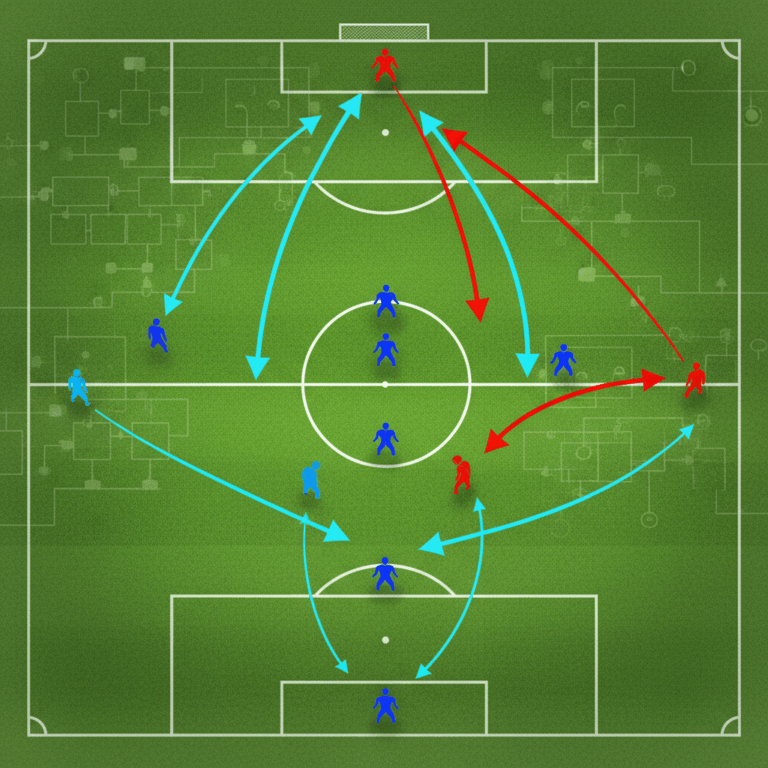
The offensive tactical structures they optimize mobility and use of space, creating numerical superiority to facilitate scoring chances. They are essential for elite teams.
These formations evolve towards dynamic models that adapt to their own style and the rival, allowing different playing styles and offensive strategies depending on the context.
4-2-3-1 system and its balance
The 4-2-3-1 combines defensive solidity with offensive creativity. The two midfielders protect the defense while the three playmakers provide mobility and game generation.
This system facilitates the quick transition between defense and attack, allowing possession to be maintained or quick attacks to be launched, adjusting to the needs of the match.
Its flexibility makes it widely used by elite clubs that seek balance and effectiveness in all phases of the game.
Characteristics of the 4-4-2 on the counterattack
The 4-4-2 it stands out for its effectiveness in counterattacks thanks to two forwards who take advantage of spaces in rival defense for vertical attacks.
Its simple and balanced positional structure facilitates quick transitions and takes advantage of the opponent's open defensive lines, generating immediate danger.
Dynamics and style of modern systems
Modern systems are characterized by their dynamism and adaptability, allowing teams to adjust tactics according to match circumstances.
The efficient use of space and constant mobility are key elements to disorganize defenses and generate multiple offensive options.
Flexibility and adaptations of 4-2-3-1
The 4-2-3-1 it stands out for its great flexibility, allowing you to vary between maintaining possession or launching quick attacks depending on the rival and situation.
Defensive midfielders provide defensive balance, while playmakers create superiority and offer mobility in the last third of the field.
This adaptability makes it easier for the team to change pace and style without losing solidity or offensive capacity, crucial in high-level competitions.
The game on the wings and pressure in the 4-3-3
The 4-3-3 emphasizes on-calls play, maximizing field width and allowing effective attacks from the wingers.
Furthermore, this structure favors constant high pressure, recovering the ball quickly and generating offensive situations from the rival defense.
It is a system that requires players with great mobility and the ability to overwhelm and assist, maintaining an intense pace throughout the game.
Importance of mobility and possession
The mobility constant players create spaces and disorganize defenses, facilitating quick and effective combinations.
The possession the ball is essential to control the pace and force the opponent to retreat, generating opportunities in dangerous areas.
This balance between mobility and ball control is the basis for building solvent and sustainable attacks in modern tactical systems.
Fundamental offensive tactical principles
The offensive tactical principles they are essential to maximize the effectiveness of any system. Elements such as game changes and triangulations favor fluidity and imbalance in the rival defense.
These fundamentals allow teams to make better use of spaces and generate numerical superiority, facilitating the creation of clear scoring chances and maintaining offensive dynamics.
Game changes and triangulations
The game changes they consist of moving the ball quickly from one sector of the field to another, disorganizing the opposing defensive structure and creating spaces for the offense.
The triangulations they involve passes between three players in strategic positions that overcome defensive lines and open routes to advance towards the rival area with greater authority.
These tactical combinations generate unexpected movements and variety in attack, which makes it difficult for the opposing defense to react and adapt during the game.
Long balls, aerial play and combined attacks
The use of long balls and the aerial game they are offensive resources that allow you to overcome blocked defensive lines and accelerate the transition to attack.
The combined attacks they integrate short passes and coordinated movements that seek to open spaces and create superiority in key areas to finish with precision.
The combination of these strategies favors offensive diversity, making the team less predictable and more adaptable to different match situations.
Human factor and tactical planning
The human factor it is key to the effectiveness of any offensive system, since the understanding and execution of tactical plans depend on collective understanding.
Careful planning allows players to adapt to different scenarios during the match, optimizing movements and spaces according to the defined strategy.
Adaptation and group movements
Successful teams stand out for their ability to adjust group movements in real time, coordinating transitions and occupation of offensive space.
This synchronization facilitates the splitting of responsibilities, allowing each player to contribute to creating numerical superiority and disorganizing the rival defense.
Adaptation translates into tactical flexibility, where roles and positions can change depending on the phase of the game and the opponent's response.
Analysis and strategic variation in the game
Tactical analysis prior to the match and during its development is essential to change offensive strategies and surprise the rival with unexpected variations.
Varying formations, passing circuits and attacking styles helps maintain a competitive profile, making it difficult for the opponent to adapt and counter effectively.
This capacity for tactical innovation is an advantage that differentiates elite teams in modern football, which seek to maximize their resources and exploit rival weaknesses.